Experts call for greater investment in talent and further subsidies as the EU prepares to revise its Chips Act
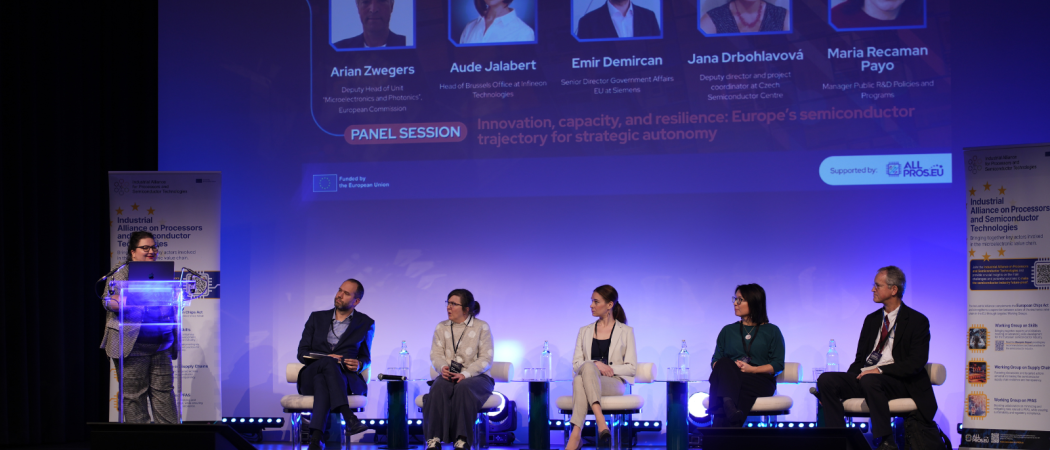
Photo credit: Trust-IT
What would it take to build a European microchips champion?
The goal remains ambitious, but still within reach, according to participants of the second in-person workshop of the Industrial Alliance for Processors and Semiconductor Technologies. Organised in collaboration with the Microelectronics & Photonics Unit of DG Connect at the European Commission, the event brought together industry leaders, researchers, policymakers, and innovators to take stock of Europe’s semiconductor trajectory.
Participants said Europe has made meaningful progress, for example, by deepening public support, strengthening open innovation, expanding its talent base, and more effectively connecting to global markets. This creates a better foundation for it to guarantee its technological sovereignty and competitiveness in the semiconductor value chain, they said.
The Alliance was launched by the European Commission in June 2024 to ensure Europe protects competition, while still promoting consolidation and innovation, after concluding that Europe needed deeper reform of competences, decision-making and financing to help respond to the challenges within the sector.
Intensifying global competition
DG CNECT, European Commission
Photo credit: Trust-IT
Europe’s starting point is a challenging one. The European Union is unlikely to meet its target of producing 20% of the world’s microchips by 2030. Since the introduction of the European Chips Act in 2022, other regions, including the United States, Japan and China, have also been investing heavily in the entire microchip ecosystem. That has cranked up global demand for the highly skilled scientists, engineers and other experts that chip design and manufacturing require.
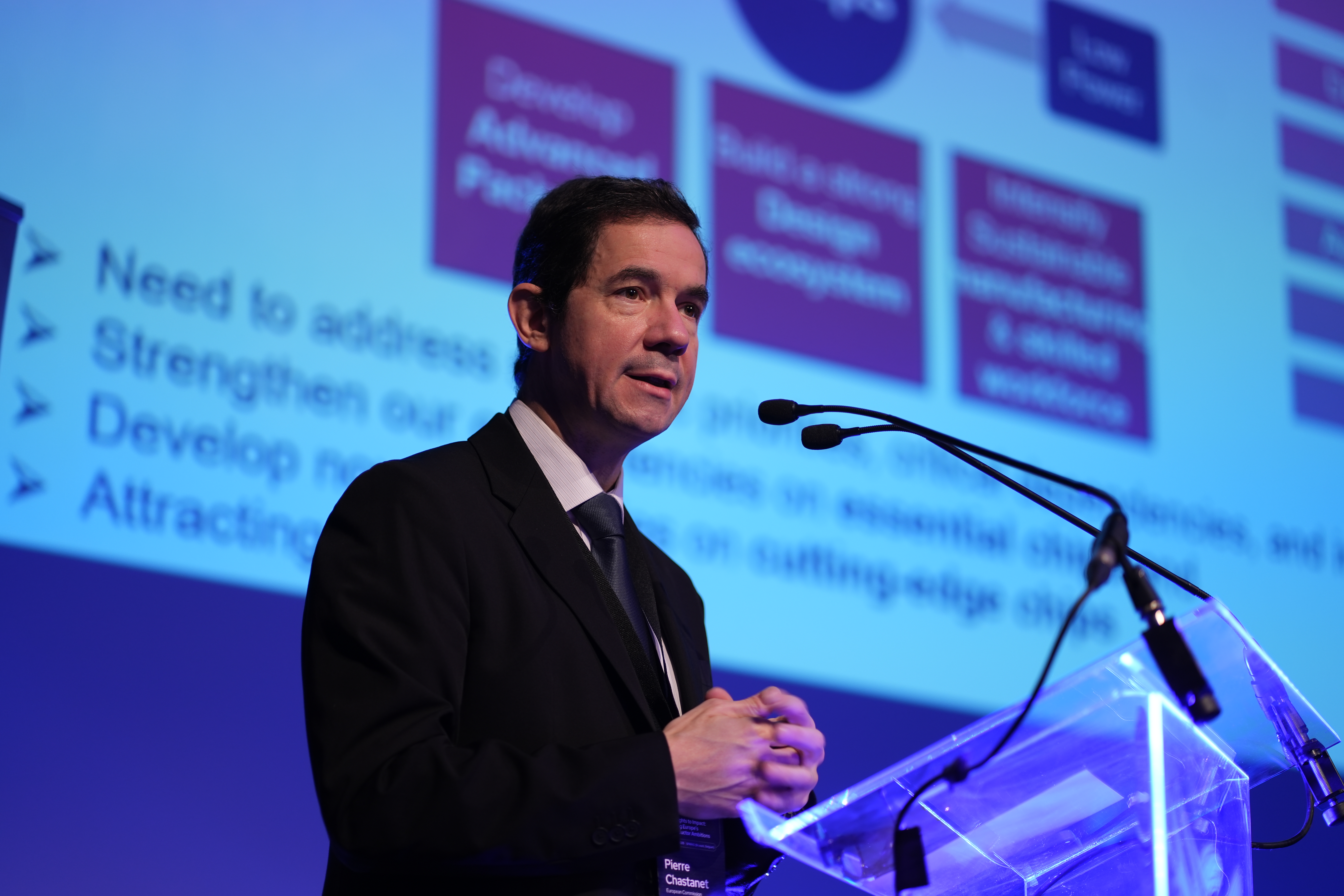
“Everyone has injected massive amounts of money into semiconductor manufacturing,” Pierre Chastanet, head of the microelectronics and photonics industry unit at the European Commission, told the conference, which was held on November 13th in Brussels. Rather than aiming for a single chip champion, the EU has recalibrated its expectations and is now aiming for a “minimum viable manufacturing capacity for advanced semiconductors” for the bloc’s automotive, industrial automation, medical and defence sectors, among others, Chastanet said.
The Commission is currently collecting data and recommendations for the planned revision of the Chips Act in 2026. The conference provided an opportunity for participants in the industrial alliance to share their experiences to date, as well as to share specific policy recommendations. It featured reports by several working groups, including people working on supply chain issues, skills and PFAS, so-called forever chemicals.
Travelling in the right direction
Most participants felt that the EU was on the right track. “Five key pilot lines have been launched and another six projects involving quantum chips are in the pipeline,” noted Maria Recaman Payo, manager for public R&D policies and programs at Imec, the world’s largest independent research and innovation centre for nanoelectronics and digital technology, which is based in Leuven, Belgium.
Aude Jalabert, head of the Brussels office of Infineon Technologies, a German semiconductor manufacturing and design company, noted that the company is completing the construction of a €5 billion microchip plant in Dresden, its biggest investment ever. “That’s an important statement that we believe in the success of Europe,” she said.
Meanwhile, the Dutch government has topped up EU financing for a new microchip “competence centre” in the Netherlands by a factor of two. Arian Zwegers, deputy head of unit in the Commission’s microelectronics and photonics unit, said the Commission has approved eight requests for state aid since the Chips Act was passed, and seven more are currently under consideration.
Still, participants stressed that Europe must keep its foot on the accelerator, if it wants to be a global leader in semiconductors. “We need more investments,” said Infineon’s Jalabert. “We need another wave. And then another wave after that.”
Several participants lamented that much of the EU’s progress to date has been driven more by politics than by industrial logic. “Most decisions in the semiconductor value chain are made politically,” said Emir Demircan, senior director for EU government affairs at Siemens. Bernard Capraro, senior manager for university partnerships and talent initiatives at SEMI Europe, an industry association, agreed. “The projects are currently following the funding,” he said. “We need the funding to follow the projects.”
Creating a larger talent pool
At the same time, several speakers acknowledged the need for governments to take the lead in key areas, including reducing energy costs, keeping trade with major trading partners flowing freely and aligning countries’ educational systems with the challenge at hand. “Talent is the key to all of Europe’s ambitions for the semiconductor industry,” noted Capraro, who said the semiconductor sector faced a shortage of 65,000 workers by the year 2030. He compared the EU to a fishing club. “Most of the membership fees go to stocking the lake with fish,” he said. “We need to stock the lake with fish”—e.g. young talent.
The Alliance’s Skills Working Group presented a video for a new image campaign to convince more young people to pursue STEM – science, technology, engineering and mathematics—studies and ultimately pursue careers in the semiconductor sector. Most EU STEM students today never even consider careers in semiconductors. The group also presented a proposal for a pan-European system of “microcredentials” that would act as technical certificates that make it easier for talent to apply for jobs in other countries.
Despite the difficulties, participants agreed that Europe now has the right ingredients and the right momentum to strengthen its semiconductor ecosystem. Marc Hijink, the author of a book about ASML, the Dutch leader in lithography equipment for semiconductor manufacturing, concluded that the EU is doing most of the right things. He said the key ingredients in ASML’s early success were subsidies, open innovation, an ecosystem approach, cultivating talent, and global markets—all of which the EU is pushing today.
For the Alliance, the next steps, in line with the results of the priorities identified in the revision of the Chips Act 2.0, are to build scale, sharpen its strategic focus, and sustain the collaborative spirit that has already driven significant advances.


 Receive the Funding Newswire [full access requires a subscription] each Tuesday, our Policy Bulletin each Thursday, and the fortnightly R&D Express, tracking reforms and investments in central and eastern Europe.
 A unique international forum for public research organisations and companies to connect their external engagement with strategic interests around their R&D system.