Partial agreement on the next Horizon Europe sets Council on collision course with Parliament in upcoming negotiations
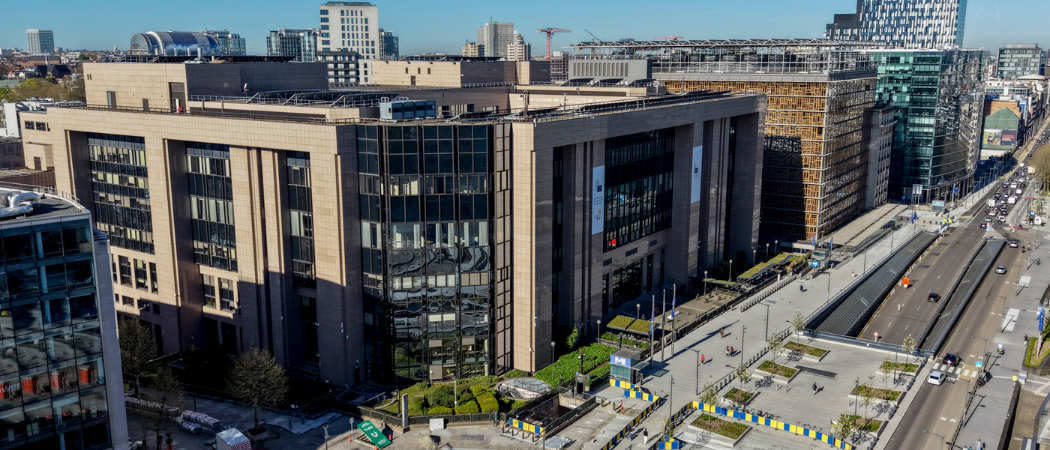
Photo credits: European Council
EU governments should have a greater say in setting priorities in the tenth Framework Programme for research and innovation (FP10), according to an agreement reached in the EU Council ahead of trilateral negotiations with the European Parliament and the European Commission.
Governments are proposing a governance model that would strengthen their involvement in the strategic priority-setting process of FP10, which like its predecessor will be known as Horizon Europe. According to the Council, the European Research Area and Innovation Committee (ERAC) would give advice on “research and innovation orientations” which would then feed into “a multiannual strategic document” that would be drafted by the Commission.
In addition, governments want to share decision-making responsibilities on collaborative research with a steering committee of the new European Competitiveness Fund (ECF). The Council says “the strategic configuration of the Programme Committee,” which is a group of representatives from member states and the Commission who agree on funding priorities in Horizon Europe, would “coordinate via joint meetings with the General Committee of the European Competitiveness Fund, notably on Pillar 2.”
Pillar 2 is the part of Horizon Europe that covers large collaborative R&D projects.
The proposal goes against demands by German MEP Christian Ehler, the Parliament’s lead rapporteur on the next Horizon Europe and co-rapporteur on the ECF, to move programming decisions to new expert councils and to ensure that future industrial policies implemented through the ECF will not “dictate” research priorities.
In a statement published after the publication of the Council agreement Ehler, who is also the Parliament’s rapporteur on the ECF, said that coordinating research priorities with the ECF would be a “strategic error.”
In draft reports published on March 13, Ehler from the European People’s Party and René Repasi of the Socialists and Democrats, rapporteur for the specific programme covering implementation measures for Horizon Europe, proposed that the competitiveness and the global societal challenges windows in Pillar 2 should be guided by two new, dedicated councils, each composed of at least 15 experts from science, innovation, industry and civil society.
The idea was first floated in a set of recommendations by an expert group set up to advise the Commission on Horizon Europe. However, the Commission rejected the idea. Back in March, Marc Lemaître, head of the Commission’s directorate general for research and innovation, said the councils would add “more complexity, heaviness and costly coordination, while undermining Commission implementation prerogatives and financial accountability.”
Other items on the Council agenda
In addition to a seeking a greater say in the strategic agenda of the programme, EU governments also want to give themselves a “guiding role” in the set-up of Horizon Europe research partnerships. The Council wants to specify a “maximum percentage cap” for partnerships budgets, which would be set once EU heads of government reach an agreement on the next multiannual budget of the EU.
The Council is also delaying a final position on the European Institute of Innovation and Technology (EIT), which has been criticised by several governments, with some recommending it be axed. Member states will discuss the future of the EIT after the Commission puts forward a separate legislative proposal. The Commission should “ensure that its proposal for the revision of the EIT Regulation provides a comprehensive and evidence-based basis for considering any future adjustments to the overall EIT framework,” the Council agreement says.
The Council agreement also brings clarity to a dispute over the mandate of the president of the European Research Council. Here, the Council aligns with calls by Ehler and Repasi to keep the mandate at four years, renewable once. A Commission proposal suggested the mandate would be reduced to just two years.
In the agreement reached this week, governments say the European Innovation Council should be able to fund defence projects, but the size of budgetary allocation for such initiatives should be capped.
Related articles
- EU member states make bid to shape ECF priorities
- Exclusive: DG RTD warns of competitiveness takeover in collaborative research
As for the budget, FP10 figures are still bracketed in the Council’s partial general approach on Horizon Europe published on June 24, but a preliminary proposal by the Cypriot presidency has seen the Commission’s budget for research and innovation being cut from €175 billion to 167.9 billion, in current prices.
Policymakers in Brussels hope the multiannual budget will be agreed by the end of 2026, ahead of crucial elections in several member states that might propel Eurosceptic politicians less keen on sending cash to the EU budget. However, diplomats admit the December deadline is “aspirational.”
All in all, the Council agreement paves the way for upcoming trilateral negotiations with the Parliament and the Commission. The Parliament’s research committee is set to adopt the final versions of the Ehler and Repasi reports by September 10. The Parliament will then vote its negotiating mandate in a plenary session in the first half of October.




 Receive the Funding Newswire [full access requires a subscription] each Tuesday, our Policy Bulletin each Thursday, and the fortnightly R&D Express, tracking reforms and investments in central and eastern Europe.
 A unique international forum for public research organisations and companies to connect their external engagement with strategic interests around their R&D system.