The Chips Act 2.0 proposal draws praise for its focus on demand and industrialisation, but success will depend on the level of funding
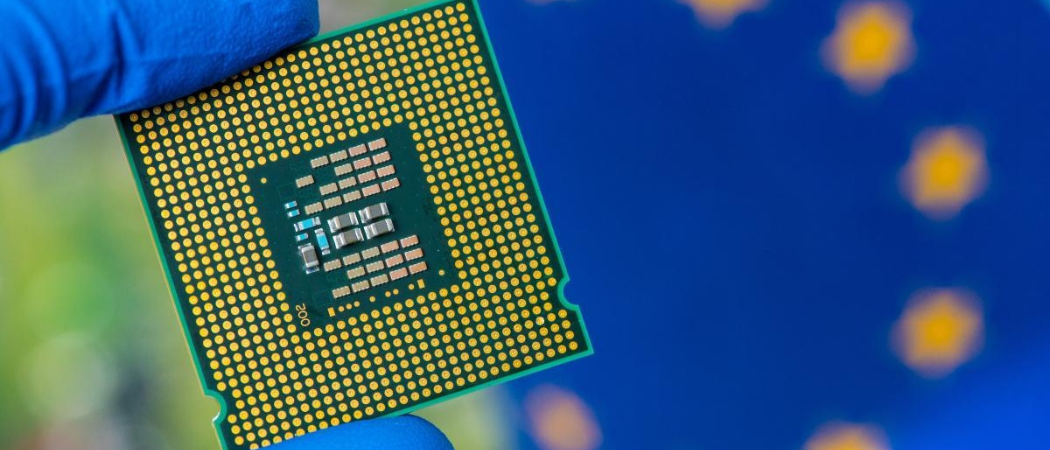
Photo credits: European Commission
The European Commission’s plans for an EU Chips Act 2.0 answers calls from industry and the research community to focus on stimulating demand and bridging the gap between research and the market. But the sector is withholding judgement until it sees whether the funding will match the ambition.
The Commission presented its update to the 2023 Chips Act on June 3 as part of its technological sovereignty package, which must now be amended and approved by the European Parliament and EU governments. But as it coincides with ongoing negotiations over the EU budget for 2028-34, the Commission has so far given no indication of the envelope that will be dedicated to semiconductors.
“In Chips Act 2, money will be scarcer, so we need to be more targeted in our investments,” said Pierre Chastanet, head of unit for microelectronics and photonics industry at the Commission, presenting initiative on June 24 at an annual conference held by French research institute CEA-Leti.
That means listening to user industries to understand their needs, he went on, to “drive the appropriate investments in chip design, in packaging, in advanced semiconductor manufacturing.” Whereas the first Chips Act focused mainly on supply and manufacturing capacity, the revision puts more emphasis on demand-side measures.
These include public procurement, links to the Cloud and AI Development Act, which aims to triple the EU’s data centre capacity, and the creation of a “demand forum” to strengthen links between technology suppliers and end users.
A new “grand challenges” instrument will support R&D in critical semiconductor technologies in close collaboration with end user markets. The challenges are inspired by the mission-oriented approach of the US Defense Advanced Research Projects Agency. They will back “a big vision that you try to implement with a concrete demonstrator at the end of the project,” Chastanet said. He cited smart glasses and autonomous drones as possible challenge topics.
AI-related components will also be a major focus, as these are expected to account for 70% of the growth in the global semiconductor market in the next four years. Meanwhile, there is the looming threat of US restrictions on the export of both AI chips and AI models.
“To build a data centre, you need processors, you need AI accelerators, and you need memory, and these are exactly the three categories of semiconductors that we don’t have in Europe, where our capacities of design and manufacturing are very limited,” Chastanet said. “So, those are the areas where we want to invest.”
The proposal represents an evolution, not a revolution, he said. “We’re not throwing the baby out with the bathwater. Most of the current instruments in the Chips Act 1.0 remain the same.”
On the supply side, priority will be given to strategic projects worth “several billions of euros,” combining funding from the EU, several member states, industry and most likely private equity, Chastanet said.
Other measures include faster permitting procedures and a new Semiconductor Regions of Excellence label. The proposal also clarifies the scope of first-of-a-kind projects that can benefit from state aid funding, to include the full value chain from raw materials to advanced packaging and assembly.
No more targets
The initial Chips Act has so far led to the creation of five pilot lines and a network of competence centres, with a cloud-based design platform set to launch in autumn 2026. When it comes to manufacturing facilities, €52 billion in public and private investments has been committed.
Chastanet said the push had reversed “two decades of declining trend” in semiconductor technologies. However, there have also been high-profile failures, including Intel’s decision to scrap its planned €30 billion factory in Magdeburg, Germany.
Europe is highly unlikely to meet the target of doubling its market share of cutting-edge semiconductors to 20%, as the European Court of Auditors warned last year. Chastanet put this down to a massive increase in investments from other countries. “The global size of the market has doubled over the last few years, and we have managed with the first Chips Act to maintain Europe’s share,” he said.
‘Huge improvements’
Amandine Reix, deputy director for space, electronics and software at the French Directorate General for Enterprise, said France was “quite happy” with the proposal, during a panel discussion at the CEA-Leti conference. “The lessons have been learned from the first Chips Act,” she said, pointing to provisions related to stimulating demand and innovative public procurement.
However, Reix also shared reservations about one of the strategic projects named in the proposal, for an advanced semiconductor foundry. “We want to see that there is really demand in Europe [for it],” she said.
Related articles
- European research and tech organisations pool efforts to advance chip R&D
- EU Chips Act 2.0 must better link R&D with deployment, industry says
- EU governments set out priorities for Chips Act 2.0
According to Frank Bösenberg, managing director of the German high-tech cluster Silicon Saxony, the proposal makes “huge improvements” on the first Chips Act. However, it’s too early to make a judgement without knowing how much money will be available, he told Science|Business. For now, it’s “more a wish list than a real industrial policy.”
“The general framework is much better than the first [Chips Act],” said Jean-René Lèquepeys, CEA-Leti’s deputy director and chief technology officer. However, “some things [in the proposal] will probably not be possible to implement.”
“The first Chips Act has been a major step forward,” he told Science|Business. The Chips Act 2.0 should build on its foundations to “provide continuity of investment, strengthen support for collaborative R&D, and facilitate the industrialisation of emerging technologies.”
CEA-Leti is heavily involved in the pilot lines, including Fames, which is hosted at its site in Grenoble. In the future, the Chips Act should support their operation, upgrading and connection with industrial users, Lèquepeys said. “Pilot lines require long-term commitment if they are to become sustainable assets for the European ecosystem.”
The first Chips Act was built upon three pillars: technological capacity building and innovation, security of supply and resilience, and monitoring and crisis response. Research actors were involved in the first pillar, while industry was mostly confined to the second pillar. This separation limited the impact of the initiative, Lèquepeys said, but the upcoming reform should provide better links between the pillars, and support the translation of research results into marketable products.
Philippe Notton, founder and chief executive of SiPearl, which designs European central processing units (CPUs), agrees the new proposal goes in the right direction. “The first Chips Act has been really in favour of the historic companies making semiconductors, and especially fab-based, to extend their fab capacity,” he told Science|Business.
While fabrication facilities are certainly needed, Europe must also support so-called fabless companies that design advanced chips, such as the CPUs and accelerators needed for high-performance computing and data centres, and outsource their manufacturing, Notton said. The revised Chips Act includes measures to boost advanced design capacities.
Fabless companies contribute around 50% of global chip revenues, but Europe currently captures less than 1% of this market. SiPearl is one of six companies participating in a Horizon Europe coordination and support action to set up an industry association representing fabless companies, and they hope to make their voices heard during the upcoming Chips Act negotiations.
The Chips Act 2.0 must now be negotiated between Parliament and EU governments. Chastanet said he expects this process to last 12 to 18 months.



 Receive the Funding Newswire [full access requires a subscription] each Tuesday, our Policy Bulletin each Thursday, and the fortnightly R&D Express, tracking reforms and investments in central and eastern Europe.
 A unique international forum for public research organisations and companies to connect their external engagement with strategic interests around their R&D system.