European centres are working together as a “meta-RTO” to dramatically reduce semiconductor energy consumption
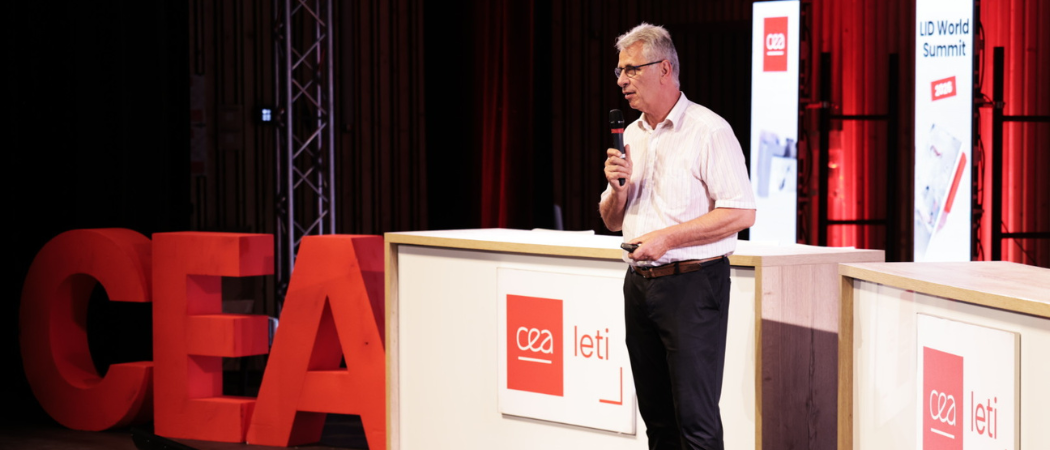
CEA-Leti chief technology officer Jean-René Lèquepeys at the Leti Innovation Days on June 24. Photo credits: utopikphoto
If Europe wants to stay in the AI race without sacrificing its environmental ambitions, it urgently needs solutions to reduce the energy consumption of the chips that power AI. This is the goal of the Resolve initiative, which was launched in 2025 and now aims to pool the efforts of 20 research and technology organisations (RTOs) from 18 EU countries.
The centres have aligned their technological roadmaps and identified complementary areas of expertise that can help speed up the path from research to market. In the past year, they have also been consulting industry to understand market needs in the next five to ten years.
Their common goal is to improve the energy efficiency of chips and electronic systems by a factor of 1,000 by 2032.
The Resolve initiative will see RTOs, including France’s CEA-Leti, Belgium’s Imec and Germany’s Fraunhofer institutes, work together as a “European meta-RTO,” said Jean-René Lèquepeys, Leti’s deputy director and chief technology officer .
“We have the best RTOs in Europe,” Lèquepeys told Science|Business ahead of the Leti Innovation Days conference on June 23-25. And yet, the EU produces less than 10% of global semiconductors, and is highly reliant on the US and Asia for the most advanced chips. “We need to work in a different way and to aggregate all the competencies in Europe at R&D level.”
Resolve is built on two pillars. The first is R&D and technology maturation. The partners have identified two “grand challenges” that will be decisive for Europe’s competitiveness in semiconductors: computing 2.0 for high-performance computing, AI data centres and next-generation accelerators; and edge and physical AI, for intelligent systems in automotive, aerospace, defence, robotics and next generation industry applications.
Based on this, they have singled out 15 key technologies across the semiconductor and electronic systems value chain where energy efficiency could be improved.
An example is dedicated accelerators, which are crucial to training and deploying AI models. Europe’s AI infrastructure is heavily dependent on graphics processing units (GPUs) from US chipmaker Nvidia. But Lèquepeys believes it’s both possible and necessary to transition away from GPUs, which are too costly and too energy inefficient to meet future AI needs. “We do not want to duplicate what has been done by Nvidia, because we think that what has been done by Nvidia could not scale up.”
Lab to market
The second pillar is a “lab to market” initiative. Stimulating demand and supporting technology transfer has so far been a missing piece in Europe’s semiconductor strategy, and is a priority of the Chips Act 2.0 proposal, presented by the European Commission on June 3.
“Lab to fab is not enough,” Lèquepeys said, referring to chip fabrication facilities. Until now, RTOs would transfer a generic technology to industry and stop there. “What is missing is that we need to help industry in their own environment, in order to support them to transform generic technology into a product addressing a clear market.”
Related articles
- Commission announces plans for EU tech sovereignty amid fears of competitiveness hit
- EU Chips Act 2.0 must better link R&D with deployment, industry says
- CEA-Leti targets energy efficiency ahead of Chips Act 2.0
Resolve will be able to draw on a key asset: five pilot lines co-funded by the EU and member states under the first EU Chips Act, including Fames, which is hosted at CEA-Leti in Grenoble. However, these facilities have proved to be too expensive for companies, which need a financial incentive to take a risk on technologies that are not yet ready for production, Lèquepeys said.
“The European pilot lines under the first Chips Act allowed great state of the art technology to develop, but mostly as research infrastructure,” Pierre Chastanet, head of unit for microelectronics and photonics industry at the Commission, said during a panel discussion at the Innovation Days event. “We could see that this was not fully meeting our hope that industry would come to research and technology organisations to pilot, test and validate technologies.”
The Commission has been working with the Resolve partners since the beginning. The way the initiative has been developed around 15 key technologies across the value chain “far exceeds our expectations,” Chastanet said.
As well as improving energy efficiency, Resolve aims to position Europe to lead the next generation of AI chips, secure European sovereignty in leading-edge technologies, and strengthen the continent’s semiconductor production capacity.
These are ambitious targets, but it remains to be seen what concrete steps will come from the RTOs’ decision to work together and align their technological roadmaps.
The success of the Resolve initiative will depend on whether it is translated into real industrial collaboration, Chastanet said. “What we would like to see is concrete industrial results, so industrial success coming from Europe that will embed technologies stemming from European pilot lines.”



 Receive the Funding Newswire [full access requires a subscription] each Tuesday, our Policy Bulletin each Thursday, and the fortnightly R&D Express, tracking reforms and investments in central and eastern Europe.
 A unique international forum for public research organisations and companies to connect their external engagement with strategic interests around their R&D system.