Canada is leading efforts to set up a Defence, Security and Resilience Bank, which will help innovative companies in Europe to access finance
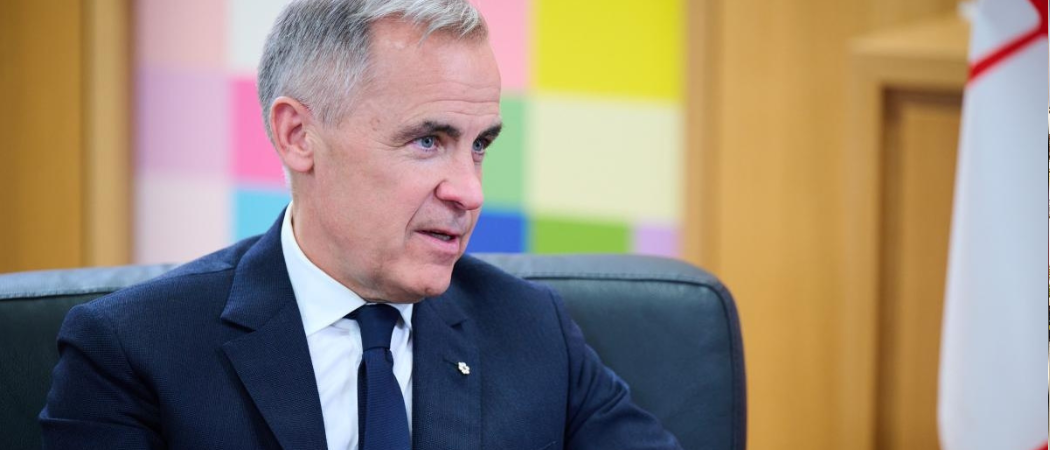
Canadian Prime Minister Mark Carney is leading the DSRB initiative. Photo credits: European Union
A new multilateral defence bank led by Canada, intended to reduce financing costs and boost industrial capacity, is expected to have a knock-on effect on innovation. But it remains to be seen whether Europe’s largest economies will sign up.
Nine countries announced their intention to establish a Defence, Security and Resilience Bank (DSRB) during the NATO summit in Turkey on July 7.
The bank will be headquartered in Canada, with a European hub in Luxembourg. It also has the backing of Albania, Belgium, Greece, Latvia, Romania, Türkiye and Ukraine. The bank could start operations in 2027, the countries said in a statement. This follows negotiations in Montreal in April, where partners agreed on the founding charter.
“The DSRB work will enable faster, more targeted investments, strengthen critical capacity, and support a more resilient and responsive defence industrial base,” said a Canadian department of finance official.
“The DSRB will also lead to significant job creation across member countries, with new orders for businesses in defence industries and new partnerships, including in emerging and R&D-intensive sectors from AI and quantum to space and cyber.”
While the details of the financing it will provide are still to be confirmed, the idea is to leverage a strong credit rating to lend directly to countries and to companies, and to guarantee loans made by commercial banks.
The announcement is “one of the most consequential steps since last year's increase in the NATO spending target,” said Rafaela Kraus, professor of leadership and corporate management at the University of the Bundeswehr Munich, who has a focus on innovation and technology transfer.
In 2025, in response to security threats including the ongoing war in Ukraine, NATO allies committed to investing 5% of their GDP in defence. “The DSRB will do much of the work of translating that fiscal commitment into real capability, by closing the industrial financing gaps we see across Europe, particularly for SMEs and start-ups,” said Kraus.
Valley of death
Kraus said the bank will fill “a genuine missing link” in the current financial landscape, as innovative firms and SMEs in the defence sector often struggle to access loans from commercial banks.
“National and EU funding programmes are indispensable, but they typically end just where scaling begins,” she said. This gap in innovation financing has been termed the valley of death. “The prototype works, the demand is real, but the path to series production remains underfunded.”
The European Investment Bank has expanded its mandate to include defence-related investments in recent years, but it does not finance weapons or ammunition.
“Supporting research, development, innovation and technology transfer, standard practice for multilateral development banks, is likely to be a core priority,” Kraus said.
Guarantees will reduce the regulatory capital banks must hold against loans and therefore reduce borrowing costs for start-ups and SMEs, she said. Meanwhile, loans to participating countries with favourable interest rates will offer a cost advantage when procuring from companies in other NATO member states. This will represent a “genuine innovation booster” for the European defence sector, which relies heavily on R&D, she said.
It may not all be about loans and guarantees. Like other multilateral development banks, Kraus expects the DSRB to make equity investments in innovative companies. Here, the €1 billion NATO Innovation Fund can provide the blueprint, she said.
Difficult access to finance
The DSRB is “an incredibly important initiative,” said Benjamin Wolba, co-founder of the European Defense Tech Hub, which aims to build a European network for defence innovation.
European banks are traditionally wary of engaging with the defence sector as they seek to respect environmental, social and governance criteria. “We’ve talked to some large banks, and they say that if you don’t have at least €50 million in turnover, they simply would not talk to these customers,” Wolba said. The European Defense Tech Hub was recently informed that its main bank account will be closed at the end of August because of its links to the sector.
Related articles
- European venture capital eyes defence sector but concerns remain
- France invites citizens to invest in defence tech
These restrictions make it difficult for European dual-use and defence start-ups to scale up. As a result, they often have to raise large venture capital rounds to fund infrastructure such as factories, where loans would be much more efficient, Wolba said.
He pointed to German defence start-up Stark, which recently raised €500 million to invest in R&D and manufacturing capacity, and German AI company Helsing, which just raised $1.8 billion. “What you are seeing is people are raising a lot of venture capital funding, and in the end, they also spend it on things that could have been funded in other ways.”
Will Stockdale, chief of staff at Anvil, a Canadian AI defence technology company, said the bank’s long-term debt and guarantee instruments could make an indirect contribution to R&D. “When a firm no longer has to fund its own scale-up out of its own cash or equity, or has access to cheaper debt because it has been de-risked by the DSRB, that capital is freed, and some of it can go to the longer-horizon R&D a working-capital timeline never justifies,” he told Science|Business.
There are other signs that attitudes are shifting. The European Commission has insisted there is no reason to exclude defence investments on the basis of environmental or social sustainability considerations, while a number of initiatives have been launched at both EU and national level to finance the sector, including the €150 billion Safe scheme, which provides EU countries with loans for joint defence procurement.
To join or not to join?
The impact of the initiative could ultimately be decided by which countries can be convinced to join. There are currently several notable absences, including Germany, France and the UK.
Countries will be asked to make a proportionate financial contribution, with Canada contributing up to €1.5 billion and smaller countries paying in less, according to Reuters. Like other multilateral banks, such as the World Bank, the DSRB will be funded through a mix of paid-in capital and “callable” capital that can only be used to repay bondholders in case of emergency.
“It is not unusual for large economies to move more slowly through their decision-making processes than small ones,” Kraus said. “At the same time, the positive economic effects of a multilateral bank are naturally greatest in precisely these large economies, because their industrial base is bigger and more capital hungry.”
Germany’s participation is not essential to the bank’s credit rating, she added, but not joining would put its industry at a competitive disadvantage, as only companies from participating countries will be able to receive support from the DSRB. “Many NATO states would like to order from German companies but cannot readily afford to. The DSRB can lower those financing costs,” she said.
The DSRB is not strictly limited to NATO members. Ukraine has already agreed to participate, and South Korea has also held talks about joining, according to reports.
The concept for the bank was first proposed by the Defence, Security and Resilience Bank Development Group, headed by Rob Murray, former head of innovation at NATO, where he led the creation of the Defence Innovation Accelerator for the North Atlantic and the NATO Innovation Fund.
A number of private lenders have also given their support, including JPMorgan, Deutsche Bank and ING.



 Receive the Funding Newswire [full access requires a subscription] each Tuesday, our Policy Bulletin each Thursday, and the fortnightly R&D Express, tracking reforms and investments in central and eastern Europe.
 A unique international forum for public research organisations and companies to connect their external engagement with strategic interests around their R&D system.