We have a historic opportunity to use Horizon Europe as part of a vigorous science diplomacy push in a world unravelling before our eyes

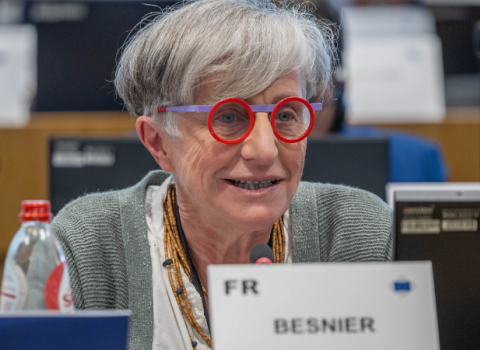
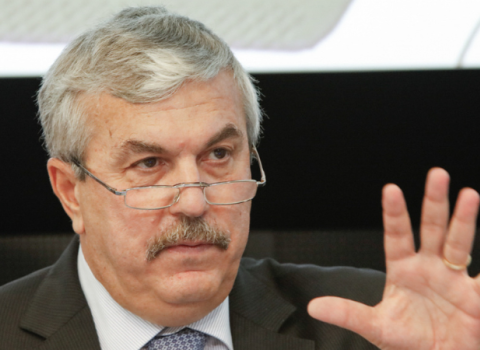
Linda Doyle, provost and president of Trinity College Dublin and chair of the League of European Research Universities (Leru) (left), and Kurt Deketelaere, full professor of EU environmental and energy law at KU Leuven and the University of Helsinki and secretary-general of Leru (right).
The rupture in the world order, described so candidly by Mark Carney at Davos, is reflected in the declining global influence of the EU, a reality which the war in Iran has laid bare. The EU no longer has the voice it once had in international politics and it also increasingly lags behind the US and China in technological and scientific leadership and competitiveness.
The EU does have one quiet but effective soft power, however; one that is not well known among the public or even fully appreciated by the EU member states themselves. It is the Framework Programme for research and innovation.
Since 1984, this programme has funded multiple large-scale collaborations between universities and industries. From supporting Nobel prize winners to early-career researchers, it has funded solutions to a multitude of challenges, from cardiovascular treatment to innovation in renewable energy. The lives of millions of EU citizens, quite literally, have benefited from the programme. Negotiations are now at an advanced stage for the tenth iteration of the programme, FP10, also to be known as Horizon Europe, which is due to begin in 2028.
While the EU has struggled to maintain its global relevance, the Framework Programme has sustained its attractiveness, signing 22 associated members from beyond the EU, ranging from the UK to Korea, from Ukraine to Türkiye, and from New Zealand to Canada. Indeed, there are few trade-agreements in the world, other than the EU itself, that involve more countries. Only last month, Australian Prime Minister Anthony Albanese and European Commission President Ursula von der Leyen opened formal treaty negotiations on Australia’s association to Horizon Europe, while India and Singapore are moving in the same direction.
The EU, for all its frustrating bureaucracy, knows how to support collaboration at scale across academia, industry and innovation ecosystems. The programme, undoubtedly attractive due to its substantial funding opportunities, is also a gateway to an extensive network of top-class universities and industry partners.
Joining the Framework Programme does not come for free. Governments contribute financially and even align with the EU from a regulatory perspective. Participants must also accept the significant administrative and bureaucratic burdens involved.
And yet they come.
Freedom, cooperation, openness
At a time of challenge for the EU, the Framework Programme is in the ascendant, its popularity due, in no small part, to the values it represents. Academic freedom, cooperation and openness are its hallmarks. Evidence and expertise are at its core. These values, once taken for granted, are shining more brightly in a world where education systems and research ecosystems are increasingly under attack.
The rupture in the world order provides an opportunity now for new forces to emerge, forces that depend on deep collaboration at scale across borders, and founded on liberal core values. In particular, the continued allure of the Framework Programme carries a powerful lesson for the strategic positioning of the EU in the world today.
While science diplomacy and the so-called Brussels Effect are already well-established realities, the EU should treat its Framework Programme as a strategic asset and an indispensable part of its soft power arsenal. Indeed, the creation of the Soft Power Council by the UK government last year underlines the importance of a deliberate and strategic leveraging of such assets to achieve influence through relationship building.
It is hoped that the Multiannual Financial Framework (MFF), the EU’s long-term budget for 2028-34, will be agreed in Dublin during Ireland’s presidency of the Council of the European Union later this year. It is a marvellous opportunity to demonstrate a deep appreciation of the power and potential of the Framework Programme.
It is not merely a matter of increased budget though. FP10 will have to interface with the proposed European Competitiveness Fund and must align with new approaches to dual-use research, while also responding to growing concern about the EU’s security capabilities. All of these demands, however urgent and legitimate, must in no way allow distraction from what the Framework Programme has delivered best for the citizens of the EU and beyond: reliable research and outstanding innovation.
And care must be taken to avoid doing harm to the framework’s global attractiveness. How existing and prospective non-EU associated members will view a programme expected to enhance EU competitiveness will be a crucial consideration.
A fine line
It is a very fine line to tread. In essence, it will demand a dual approach to FP10: the adequate resourcing of its continued expansion, while simultaneously ensuring the programme remains attractive to associated members, despite the adjustments to address the EU’s own pressing needs.
Every crisis is an opportunity, and the challenging research environment in other countries provides a moment for EU values to be promoted now in a very practical way.
From data protection to AI ethics, from open science to sustainability, FP10 is the ideal vehicle to promote vital, but increasingly marginalised, priorities in other research systems.
FP10 also stands as a bold alternative to rising techno-nationalism and the EU should vigorously leverage this, relying, in the words of Mark Carney, not merely “on the strength of our values, but also the value of our strength.”
It would serve the EU well if political leaders across member states recognise this significant soft power and prioritise the Framework Programme as a core element of Europe’s strategic international positioning. It is not a perfect instrument. It has its flaws. But there is nothing like it in the world, and in the coming months as the next MFF is agreed, the EU, which desperately needs a positive, global flagship, should bear this in mind.
To adapt Nobel laureate Peter Agre’s book title, it is now time to ask “Can researchers succeed where politicians fail?”
Linda Doyle is provost and president of Trinity College Dublin, and chair of the League of European Research Universities (Leru). Kurt Deketelaere is a full professor of EU environmental and energy law at KU Leuven and the University of Helsinki, and secretary-general of Leru.


 Receive the Funding Newswire [full access requires a subscription] each Tuesday, our Policy Bulletin each Thursday, and the fortnightly R&D Express, tracking reforms and investments in central and eastern Europe.
 A unique international forum for public research organisations and companies to connect their external engagement with strategic interests around their R&D system.