Berlin-based Dunia argues automated testing can generate enough clean data to find the materials of the future
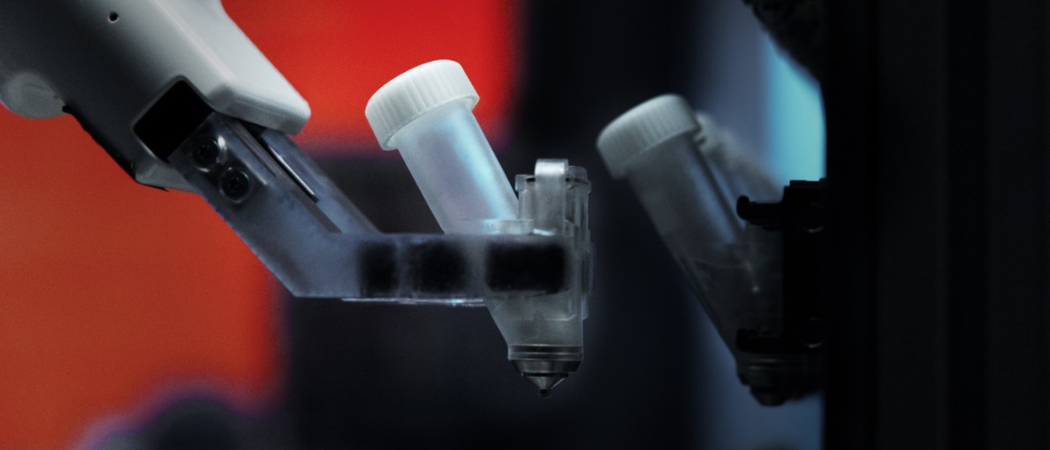
Photo credits: Dunia
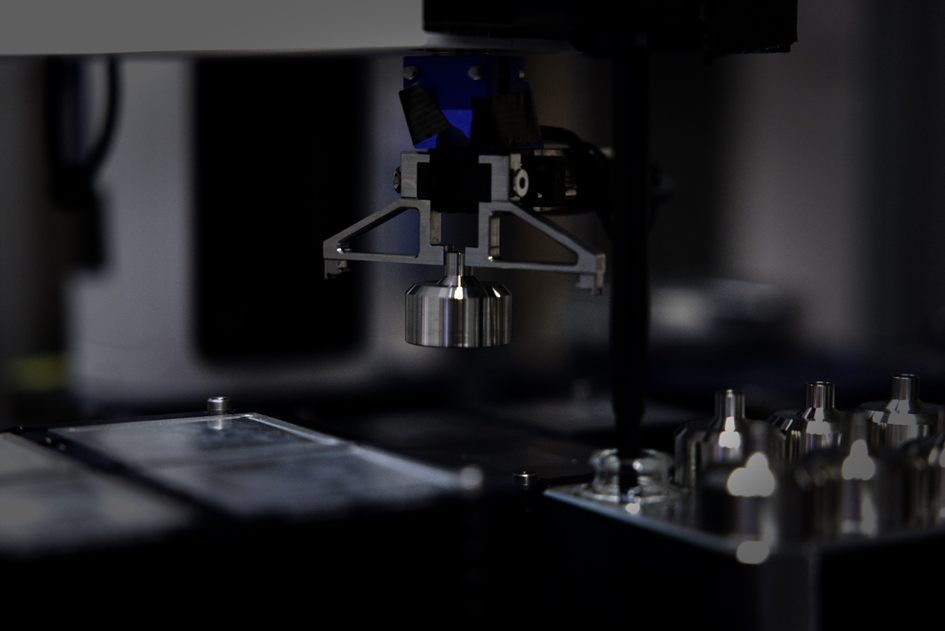
Inside a Berlin lab, white robotic arms are quietly at work. Like human scientists completely engrossed in a task, they methodically pick up and move different materials between test stations in a near-silent automated dance.
This is one of the world’s leading robotic labs, created by Dunia, a German start-up that is trying to automate the process of testing new materials in a bid to find revolutionary new compounds for electrolysers, batteries or semiconductors.
“It’s one of the most advanced materials exploration platforms in the world,” says Alexander Hammer, Dunia’s co-founder and chief executive. “We want to have factories that do science.”
Hammer’s pitch is twofold. First, materials, never the most glamourous of fields, have the potential to unlock a dazzling new future and significant economic growth in Europe and beyond. A new wave of materials is well overdue, say advocates: concrete, the world’s most widely used material and a huge source of carbon dioxide, is more than 2,000 years old.
Secondly, Hammer thinks that robotic labs working around the clock are the only way to create enough standardised data to find useful and scalable new materials candidates. He wants the EU to stump up €500 million to build automated testing factories.
“The average person doesn't care about materials at all,” Hammer says. “They don’t wake up in the morning and say, I wish we had a different type of steel”.
But new materials underpin nearly every promising breakthrough imaginable, Hammer goes on. New superconducting magnets are being used to control nuclear fusion reactions. Novel catalysts could remove carbon dioxide from the air in a form of artificial photosynthesis.
Flying cars, the ultimate sci-fi dream, would be possible if we had batteries with ten times the energy density. “Every frontier technology [. . .] really depends on materials science,” Hammer says.
AI hopes disappoint
Recent advances in artificial intelligence have led to hopes that machine learning techniques could be used to wade through data on material properties and predict promising new compounds. US tech firms such as Google have claimed their AI models have identified millions of promising new materials.
But materials scientists have been somewhatsceptical of these claims and, so far, none of the AI promises have borne fruit in scalable new materials.
One of the problems, some say, is that there isn’t good enough data on materials to feed into AI models.
Hammer agrees. Despite the EU’s focus on building huge AI computing clusters, the bottleneck in materials science is not compute, but quality data, he says. “It’s a data problem. We’re almost starting at zero.”

For example, Dunia has tested ostensibly promising new materials proposed in academic papers, but these proved “mediocre,” he says.
One of the problems, according to Dunia and others in the field, is that academics tend to produce materials that only have outstanding properties in very artificial lab conditions. This wins them career-boosting published papers, but does little to invent materials that are useful in the real world and can be mass produced.
This scaling problem is key in materials science. Dunia’s autonomous labs can’t test with certainty if a material can be produced cost-effectively in industrial quantities. But the company says it tests materials under increasingly realistic conditions, checking whether they degrade, for example. This should give much better data than existing academic lab tests.
Materials companies also have experimental datasets, but these are often quite small, and sometimes lack the metadata needed to feed them into machine learning models, Hammer adds. Aggregating data from different sources is tricky too, he says, as each set has different noise levels. “There’s lots of variability.”
Science factories
The solution to this messy data problem lies in robotic labs, working day and night to build the standardised materials data that can be fed into machine learning models. “Having self-consistent data sets is really important,” Hammer says.
In the room with the robotic arms, Hammer explains that such automated labs have only recently become reliable and cost-effective due to the falling cost of robotics and advances in computer vision. It then takes pioneering “scientific engineering” to rig together an automated lab.
Later this year, Dunia plans to open a so-called gigalab, a warehouse full of automatic materials testing modules, co-funded and built with large European engineering firms.
€500 million EU science factory
But Hammer wants an automated lab on an even bigger scale. He’s asking the EU to launch a €500 million Important Project of Common European Interest (IPCEI) to build a European materials testing lab. An IPCEI is a kind of special EU vehicle to fund projects that might otherwise fall foul of state aid rules. The EU could then act as a lead customer, procuring materials datasets for European companies and academics to use.
“We're already building an industrial prototype for these autonomous labs,” he says. “Scaling that up would be the next step, and that's happening around the world.”
Hammer acknowledges this sounds rather like Dunia asking for a big EU subsidy. “Dunia is absolutely in a position to [. . .] scale up these AIfor-science factories,” he says, but couldn’t do it alone. “We are very happy to put our own money at risk.”
But he says that EU governments have poured enormous sums into other types of tech and research infrastructure, which is always hard to fund through private capital that wants a quick return.
The German government reportedly offered billions of euros in subsidies to Intel to build semiconductor plants on European soil before the US chipmaker scrapped the plans, he says.
Hammer wants an IPCEI to fund the automated lab because waiting for a call in Horizon Europe, the EU’s research and innovation programme, will be “too slow.” Last November, the Commission announced around €100 million in funding calls for AI in science, but these calls are only expected to be released later this year, and in 2026-27.
US relocation?
Dunia is far from the only start-up trying to build automated labs to speed up science. Lila Sciences, based in the US, is also trying a similar tack, although its focus is broader than just materials science. So far, it has raised $550 million. San Francisco-based Periodic Labs, also a generalist robotic labs start-up, announced it had raised $300 million last year.
By contrast, Dunia’s war chest is tiny. Its most recent round raised €11.5 million in 2024, largely from European venture capital firms. Hammer gets quizzed almost daily about whether the company will relocate to the US to raise more money.
Asked by Science|Business, he didn’t give a definitive answer. “Money definitely matters a lot, even if you're disciplined,” he says. Dunia is perhaps three times as “capital efficient” as its better funded rivals, he went on. But competitors have raised in the region of 20 times more. “That’s a real challenge, for sure.”
On the other hand, Europe is a great place to build robotic labs. “The engineering firms that can actually build this, they sit in Europe,” he says. “When people in China are trying to build these automated labs, they actually import machines from Freiburg in Germany.”
Related articles
- More funding and better incentives needed to scale-up new materials
- The EU’s AI in science plan gets a mixed reception
- Research commissioner appears to cite discredited study in AI speech
Europe also has plenty of established engineering firms that know how to scale up the manufacture of new materials. “If we now move from kilogrammes to tonnes, there's many potential companies that can really help us,” he said. And while the US dominates software, 85% of the global chemistry and materials science market is outside the country, he said.
Donald Trump’s threats to annex Greenland, and general instability in the US, are also a factor making the US less attractive to start-ups, Hammer says. Three US-based start-up founders, one American and two European, have recently told Hammer they were considering relocating to Europe.
“There might be some signs that things are changing, for a number of reasons,” he says. “But I would never underestimate the US ecosystem.”

 Receive the Funding Newswire [full access requires a subscription] each Tuesday, our Policy Bulletin each Thursday, and the fortnightly R&D Express, tracking reforms and investments in central and eastern Europe.
 A unique international forum for public research organisations and companies to connect their external engagement with strategic interests around their R&D system.