Leszek Kaczmarek calls for greater understanding of local context when assessing research excellence
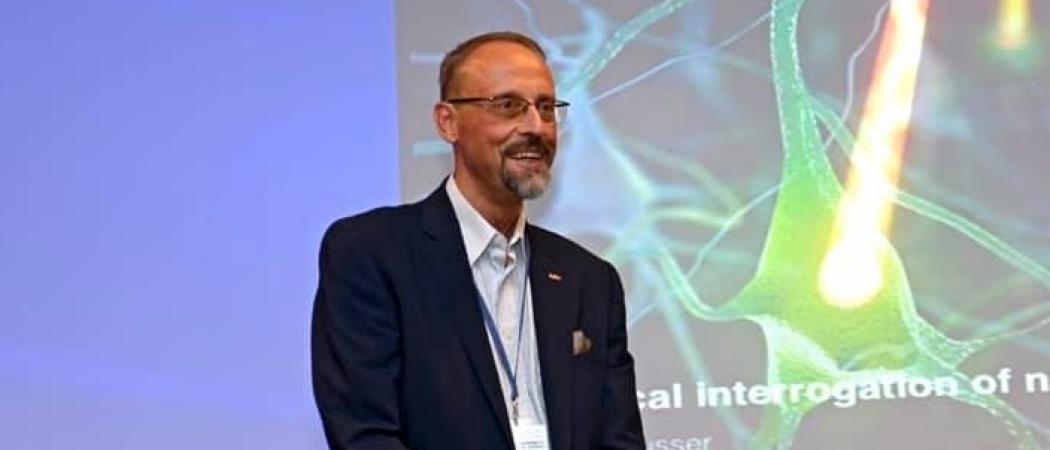
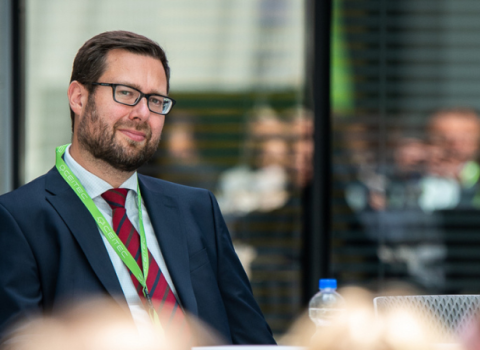
Leszek Kaczmarek. Photo credits: www.forumakademickie.pl
The need to address Europe’s east-west research gap is stronger than ever, according to Leszek Kaczmarek, who leads on the issue for the European Research Council (ERC). Following the publication of an ERC white paper on the subject in March, Kaczmarek says that it is time to “talk more seriously about this gap” and address the structural biases that make it so hard to close.
Kaczmarek, a professor of neurobiology at the Nencki Institute in Warsaw, chairs the ERC’s Widening working group that produced the white paper and is a member of the ERC Scientific Council.
“Years ago, the scientific community started to talk about the gender issue and this imbalance, and now we all appreciate that there was something wrong and we are trying to fix it. My hope with this ERC white paper is to add fuel to the debate about the research gap, to take it more seriously,” he told Science|Business.
“My feeling is that there is not enough sensitivity for this issue within the research community,” he went on. “Especially in the top places, we have to realise how much we lose because of this gap.”
In particular, he wants to see greater understanding of the environment that researchers are working in when it comes to assessing the excellence of their work and grant proposals.
“For example, it is going to be harder for a scientist from a less well-known institute in a Widening country to publish in a top journal, even if their work is excellent. That then has an impact on what they are able to achieve in terms of winning grants,” he said.
How someone performs in the context of their environment therefore needs to be taken into account. If, for example, they are the stand-out researcher within their institution and publish a paper in a journal with a higher reputation than their colleagues normally do, even if it is not one of the top journals, that should go some way to proving their excellence.
The ERC has made changes to make its research assessment fairer, including in 2024 establishing formally that the excellence of a proposal should weigh more than the applicants CV, and introducing a narrative section to the CV for researchers to better describe their career paths, including unconventional career paths and outstanding contributions to the research community. Kaczmarek hopes this will have an impact.
The ERC report highlights other challenges that explain the weaker performance of researchers from in Widening countries.
A primary factor is that better performing countries spend more on R&D. “We have figures in the white paper that show that ERC success is directly proportional to the funding provided by the member states,” Kaczmarek said. “So, obviously the funding has to be increased, and the decision-makers in these countries have to realise that this is a direct relationship.”
There are other factors, including Widening countries having evaluation processes that are not based on merit, unattractive career prospects and incentives, a lack of international mobility and opportunities for collaboration, and a lack of grant support offices and administration.
“Each Widening country has its own specific context and requires tailor-made policies,” the report states.
Overall, Kaczmarek is optimistic about the future, but admits there is still much to do. “What we really need to work on is the number of excellent grant proposals being submitted from Widening countries, that’s really a disaster,” he said. “I hope that will change, but we have to work on that.”
 Receive the Funding Newswire [full access requires a subscription] each Tuesday, our Policy Bulletin each Thursday, and the fortnightly R&D Express, tracking reforms and investments in central and eastern Europe.
 A unique international forum for public research organisations and companies to connect their external engagement with strategic interests around their R&D system.