The country has set bold ambitions to revamp its research sector, with experts on the ground saying steady improvement is being made
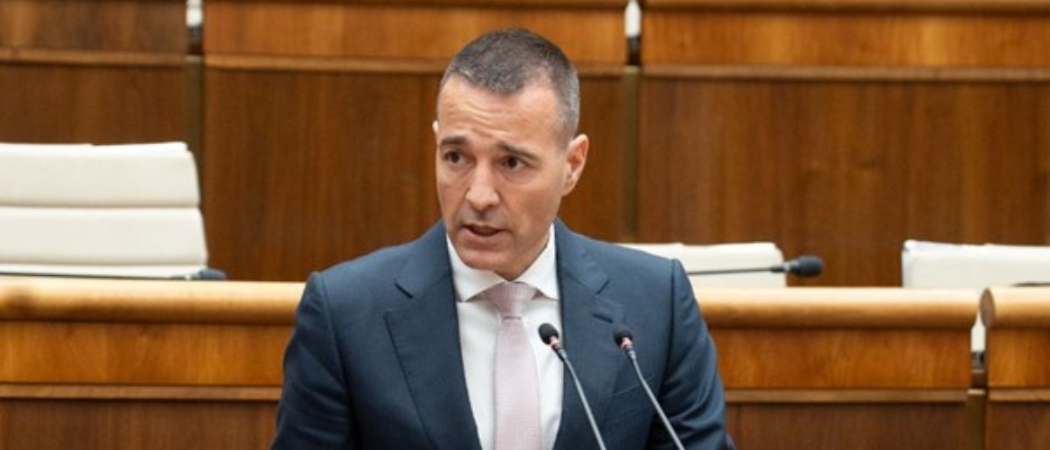
Tomáš Drucker, Slovakia’s minister of education, research, development and youth. Photo credits: Ministry of education, research, development and youth of Slovakia
Slovakia has updated its national research strategy to put more focus on competitiveness and to try to keep pace with the target of raising R&D spending to 2% of its GDP by 2030, a target most experts are sceptical will be met.
The new 19-point action plan for 2026 to 2028, adopted earlier this month, builds on the original 2023 strategy that set out bold ambitions for the country to turn its stagnating and fragmented research and innovation landscape around by 2030.
The update was pre-planned, with the overall strategy being revised every three years. A second update is due in 2029.
The new action plan is a “clear signal that the government is aware of the importance of innovation and technological progress for the future of Slovakia,” said research minister Tomáš Drucker on announcing the plan.
Some of the key changes brought in by the amendments include plans for a new national start-up and scale-up strategy, a fund to support breakthrough technologies inspired by the EU’s European Innovation Council (EIC) and the US Small Business Innovation Research programme, and broader support and training for the country’s technology transfer offices.
Beyond this, the update adds specific focus on robotics, AI and healthcare, areas earmarked as important for the country’s innovation ecosystem.
“Slovakia’s updated [plan] marks a shift from a conventional innovation support framework toward a more ambitious agenda for industrial and technological competitiveness,” said Kamil Novák, a policy advisor at the Slovak Liaison Office for Research and Development in Brussels.
“Its role is crucial in transforming Slovakia’s previously fragmented research and innovation support structures into a more cohesive and synergistic system, one that covers the full innovation pathway,” he added.
The updated strategy will mean universities forging closer ties to industry and professionalising technology transfer services.
Jozef Masarik, vice-rector for science and doctoral studies at Comenius University Bratislava, welcomed this development, saying it means an end to the era of “research in a drawer” and will move universities towards a “model that can bring both funding and prestige.”
He did, though, add a note of caution. “This transition must be managed carefully. Comenius University is a classical rather than a technical university,” he said. “Nevertheless, in areas such as natural sciences, informatics, physics, medicine and pharmacology, the new approach opens up important opportunities.”
Reaching 2% R&D spending
Slovakia’s original 2023 strategy was based heavily on using money from the EU’s post-pandemic Recovery and Resilience funds. The country set aside over €500 million of this money for research and innovation purposes. So far, around 2,000 projects have been financed, to a tune of over €350 million.
The government is now transitioning away from relying on these funds and, according to Novák, positioning itself for opportunities under the EU’s next long-term budget, which runs from 2028 to 2035. “The update comes at a crucial moment for Slovakia,” Novák said.
The original strategy set a target for the country to increase its overall R&D spending to 2% of the country’s GDP by 2030. It has since grown from 0.89% to 1.03%, according to the latest figures. In an EU context, this puts the country ahead of only Latvia, Bulgaria, Cyprus, Malta and Romania.
This change is down to a modest increase in private R&D spending, which rose from 0.48% to 0.58% of GDP in 2025. Public R&D spending has decreased in this time, from 0.41% to 0.36%.
The EU’s long-held objective is for all member states to increase total R&D spending to 3% of GDP. There is little expectation Slovakia will reach its 2% target by 2030.
“I am afraid that it is not realistic, especially in [the current] complicated economic situation,” said Martin Venhart, president of the Slovak Academy of Sciences.
Masarik is similarly sceptical, saying the target is theoretically possible, but “highly unrealistic” without massive investment from both the state and the private sector. “Reaching 2% would require one of the fastest increases in R&D spending ever seen in Europe,” he said.
Michal Habrman, head of the research and innovation policies unit at the Slovak Research and Innovation Authority, the authority tasked with implementing the strategy, is more optimistic, saying the 2% target remains reachable “if the government fulfils its promises for increased national budget R&D spending and also implements the measures in the action plan.”
He says the data available does not yet reflect the true reality of increased R&D spending. The bulk of the budget available through the Recovery and Resilience funds has only come in 2025 and 2026, while the most important R&D calls from European structural funds were only opened at the end of 2024.
On the national side, R&D investments increased from €50 million in 2024, to €150 million in 2025 and €279 million in 2026, so figures may still improve.
There are, though, other areas of concern. The 2023 strategy set the goal of rising 10 places on the European Innovation Scoreboard, to reach the number 13 spot. In the past three years, the country has dropped one place to 24. The amount of international patent filings has, relative to the country’s GDP, also decreased, putting another 2030 target further out of reach.
Habrman acknowledges that some challenges still remain. Two areas that haven’t been successful are a proposed reform of the R&D tax deduction scheme that would have been a boon for corporate research investments, and a new act on research, development and innovation, which has been halted. This law would have simplified the implementation of R&D support and established a technology fund for innovations, similar to schemes in Czechia and Austria, Habrman said.
In Brussels, meanwhile, MEPs have expressed concerns about potential breaches of the EU’s founding values by the Slovakian government, including issues related to rule of law, misuse of EU funds, media freedom and minority rights.
On this basis, the European Parliament is calling on the EU to trigger the conditionality mechanism in Slovakia, which could, potentially, lead to the EU withholding certain funds, as has been the case in Poland and Hungary.
Slow but steady improvements
Despite the challenges, the mood music on the ground in Slovakia is that improvements are being made, albeit gradually.
The original strategy brought in a system whereby the funding of the Academy’s institutes and universities is more closely tied to performance in key areas, which, according to Venhart, has had a positive effect.
“We see a significant improvement in key parameters such as highly ranked [academic] publications and an increase in the number of submissions to prestigious European funding calls,” Venhart said.
The government is also working to consolidate resources. “Another impact is that the number of institutes of the Academy is going to decrease, and they are going to establish larger institutions by merging existing ones,” he said.
For Novák, a slow but steady approach, with lofty aims, is the right way to go. “The goals of the strategy are indeed very ambitious, and there is still a great deal of work to be done in order to achieve them. However, it is precisely this ambition that drives meaningful change,” he said.
“Our previous experience has shown that a stable and gradual increase in funding is significantly more effective,” he went on. “This is particularly important in the context of an innovation ecosystem that is still developing. Before scaling up funding, we must first complete the construction of a solid foundation consisting of the right instruments, mechanisms and incentives that can later support larger-scale investment effectively.”
Retaining talent a priority
Brain drain is a notable problem for Slovakia. The share of university students studying abroad is around 20%, with many heading to neighbouring Czechia. The EU average for a country is somewhere around 5.2%. The issue is that only around 40% of these students return to Slovakia after their studies, according to an assessment by the Ministry of Education, Research, Development and Youth.
Both Novák and Masarik highlight the importance of the strategy, and the updated action plan, in countering this ongoing problem. For Masarik, it is again a question of implementation.
“Although the policy plans and roadmaps have now been approved, turning them into tangible commercial successes and addressing some of the key problems of the Slovak RDI ecosystem, such as reversing talent loss, will remain a significant challenge,” he said.
Related articles
- Slovakia sets out strategy to turn around stagnating R&D system
- Widening countries suggest more ERC support to close research gap
- How EU countries have spent €56 billion of pandemic stimulus on R&D
Venhart, meanwhile, wants to see more national support for researchers. “We urgently need to invest in the people who have shown a potential for success in European schemes,” he said.
The new action plan acknowledges the challenge the government has had in supporting researchers who apply for EU funding but miss out, and sets out a new support system to address this group.
The plan commits to offering funding to applicants to various EU schemes, including the prestigious European Research Council and the EIC, who receive a Seal of Excellence quality stamp that recognises the excellence of proposals that are not funded due to budgetary constraints.
Implementation is key
Slovakia has been here before. Previous efforts to revamp its research and innovation landscape, such as the Minerva 2.0 strategy of 2011, have come and gone with limited impact.
And there are real, engrained challenges to overcome. “We have not yet succeeded in building mutual trust between the state, academia and the private sector,” Masarik said.
But he isn’t completely pessimistic about the new strategy and update. “I do believe that the chances of success are significantly higher this time than in previous attempts,” he said. “The difference lies not only in the amount of funding available, but also in the overall approach and in the fact that there is now real pressure from all stakeholders involved to ensure implementation.”
The research ministry has been very active in implementing the strategy and has “largely delivered on its promises,” Masarik said. “There has been a substantial increase in university funding, modernisation of the relevant legislation and greater pressure on quality assurance through the monitoring and enforcement of academic standards.”
The trick, as always, is implementation. “The impact of the plan will depend on genuine political will,” he said. “On paper, the plan is ambitious, but our experience shows that many plans remain only on paper. If implemented properly, however, it could become an important milestone for Slovak research, development and innovation.”




 Receive the Funding Newswire [full access requires a subscription] each Tuesday, our Policy Bulletin each Thursday, and the fortnightly R&D Express, tracking reforms and investments in central and eastern Europe.
 A unique international forum for public research organisations and companies to connect their external engagement with strategic interests around their R&D system.