Draft negotiating position on €409 billion European Competitiveness Fund gets mixed reviews from industry and universities
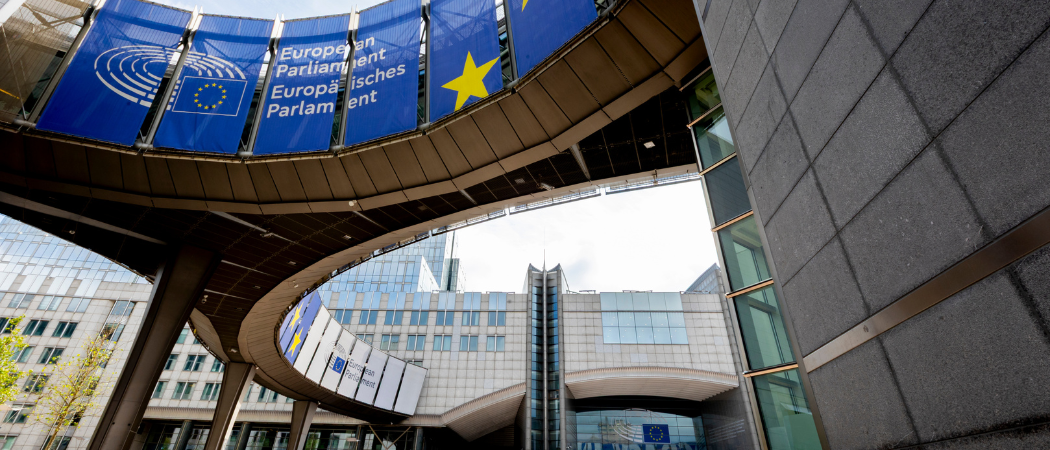
Photo credits: Alain Rolland / European Union
The European Parliament’s rapporteurs for the European Competitiveness Fund (ECF) have published their draft vision for the proposed €409 billion fund, with an alternative model for its “tight” connection with the EU research programme Horizon Europe.
In their draft report, Christian Ehler for the European People’s Party and Dan Nica for the Socialists and Democrats reject the European Commission’s proposal of a single work programme to control the ECF and Horizon Europe’s Pillar 2 for collaborative research. Instead, they want to introduce bridge funding between the two funds.
These Horizon Europe Pathway Actions, as the report calls them, would build exclusively on Horizon Europe project results, funding deployment, commercialisation, scaling, licensing, standardisation or other forms of knowledge translation. Ehler says they would serve "a simple funnel between the two programmes."
The rapporteurs say the grants would help bridge the gap between the programmes without tying Horizon Europe into the policy-guided ECF. Ehler believes this approach would also simplify management, even if it introduces a new type of funding.
"I strongly believe that if we have non-overlapping and purposeful instruments that offer applicants a clear picture of what is expected of them, [it] is much simpler for applicants than the vaguely defined options for instruments that the Commission gave itself under its proposal," Ehler told Science|Business.
According to the draft report, Pathway Actions calls should be defined by the same independent expert group that the Parliament wants the Commission to establish to advise on Horizon Europe. But the projects would be funded under the ECF.
In theory, these pathway actions would be similar to the European Innovation Council's Transition grants, which already offer funding to some Horizon Europe beneficiaries to develop business cases and turn research results into validated technology. But the exact shape, size and nature of the calls for projects would depend on the vastly different market needs across technologies and sectors they would support.
Mixed reaction
The proposal follows months of debate on how to link Horizon Europe and the ECF, which is one of the most controversial aspects of the Commission’s proposal for the next EU budget period, due to start in 2028. Louise Drogoul, senior adviser for innovation and sustainability at the Cesaer university association, said the report moves the ECF debate in the right direction by suggesting that collaborative research in Horizon Europe’s Pillar 2 should not be absorbed into a competitiveness governance framework.
If well designed, Horizon Pathway Actions “could provide a more structured bridge between Horizon-funded results and later-stage deployment, commercialisation, scale-up or uptake in Europe,” she told Science|Business.
But much will come down to implementation. “The concept will only be useful if it remains clearly downstream and does not become a back door for reshaping the purpose or governance of Pillar 2 itself,” which should remain open and based on excellence, Drogoul said.
Pathway Actions should “address genuine deployment bottlenecks and market failures,” recognise the role of universities and research organisations, and offer a simple and predictable mechanism, she added. “Otherwise, there is a risk of adding yet another layer of complexity between research and application.”
Joep Roet, deputy director at the Netherlands House for Education and Research, also welcomed the Parliament’s amendments, in particular because they reject steering research priorities and calls through the ECF, instead prioritising coordinated priority setting and delineating a pathway from research to deployment.
“Research and innovation are unpredictable by nature, so let researchers conduct research via [Horizon Europe], while scaling up promising results through the ECF, rather than doing things the other way around,” he said. “The pathway from research to deployment is welcome, including these actions as well as [industrial partnerships].”
Industry, meanwhile, prefers the Commission's approach. "Unlike the co-rapporteurs, BusinessEurope supports placing [Horizon Europe's collaborative research] in an integrated work programme," said the industry lobby group’s chief economist, Lúcio Vinhas de Souza.
While the group welcomed the Parliament's push for stronger linkages between the programmes to support commercialisation, when it comes to the Pathway Actions, "the proposal still requires further detailed analysis and assessment," he said.
Budgets
The rapporteurs also propose increasing the ECF’s budget, from €234.3 billion under the Commission’s proposal to €257.7 billion. This is still lower than the €264.4 million figure adopted by the Parliament’s budget committee last week in its draft report on the overall EU budget.
The report also introduces slight modifications to the names of the ECF’s four policy areas and suggests a more detailed budget breakdown, including dedicated budgets for the InvestEU loan, equity and guarantee scheme. While the Commission proposal included the ECF InvestEU Instrument, the Parliament proposal goes further by assigning specific InvestEU amounts to each policy area. The headline figures are:
Energy infrastructure, industrial decarbonisation and clean technology
- InvestEU: €15 billion
- Energy infrastructure: €14.73 billion
- Industrial decarbonisation and clean technology: €10 billion
Biotechnology, health and sustainable prosperity
- InvestEU: €5 billion
- Health: €4 billion
- Biotechnology: €3 billion
- Sustainable prosperity: €3 billion
Digital infrastructure and agile digital leadership
- InvestEU: €15 billion
- Connectivity and digital public infrastructure: €15 billion
- Technology infrastructure: €14 billion
- Agile digital leadership: €10 billion
Security, critical raw materials, defence and space
- InvestEU: €5 billion
- Critical raw materials: €10 billion
- Defence industry and security: €54 billion
- Defence research and innovation: €13 billion
- Space: €50 billion
Adriana Rodríguez Rivera, senior policy analyst at consulting firm Climate Strategy and Partners, welcomed the increased budget and the fixed amounts for each policy area rather than the “indicative” envelopes put forward by the Commission. “This allows for better democratic oversight of the priorities set and demonstrates EU determination to provide funding to these areas,” she said.
Focus and agility
Ehler and Nica have sought to sharpen the ECF’s priorities. This starts with providing a definition of competitiveness, centred on “the ability of European companies to compete successfully in global markets,” which involves “making it easier to invest, lowering energy costs, enhancing productivity, boosting innovative capacity and increasing long-term public investments.”
Johannes Jarlebring, senior researcher in political science at the Swedish Institute for European Policy Studies and one of several experts quizzed by MEPs on the ECF in February, approves of this definition of competitiveness, adding that the “bold and well-elaborated” report “enhances conceptual stringency.”
Jarlebring noted that the report specifies strategic autonomy as reducing strategic dependencies on a few external suppliers for critical inputs, and narrows the use of European preference in the ECF. “The aim is clearly to keep Europe open to business,” he told Science|Business.
The rapporteurs also bemoan rigid EU funding procedures, with the preparation of work programmes often taking more than a year, which they say is too slow for the fast innovation cycles which characterise the digital sector.
They therefore propose creating a new section in the fund, labelled Agile Digital Leadership. Here, work programmes “should set out only the budget, objectives and areas of interventions.” Teams of programme managers using a portfolio approach should be responsible for designing award procedures, and reorienting or terminating calls that aren’t delivering.
Meanwhile, the draft proposes a €16 billion “flexibility reserve,” to be reallocated to respond to new challenges or emerging priorities over the seven-year budget period.
Defence programme
The MEPs also responded to an absence of detail in the Commission’s proposal for a specific programme for defence research and innovation, which will be part of the ECF, by proposing three programmes that would fall under its umbrella. These are:
- The Vanguard Programme for Early Research in European Defence, supporting high-risk, high-reward research and technologies with defence potential, implemented by programme managers;
- The Programme for Scaling High-Impact Innovation for European Leadership in Defence, supporting defence start-ups, including through equity instruments to be implemented through the European Innovation Council Fund;
- The Programme for Defence-Oriented Breakthrough Research for Europe, funding collaborative applied research actions for defence, focusing on jointly agreed capability priorities, modelled more closely on the existing European Defence Fund.
Spin-in actions to adapt the results of Horizon Europe projects for defence applications would be possible under any of the three programmes.
Advisory councils
Much like the Parliament’s draft reports on the next Horizon Europe, the ECF report introduces more expert-driven governance. This includes creating an Economic and Technological Advisory Council, with up to 15 members, who would be appointed by the Commission following an open call.
This panel of experts in economics, innovation and technology development should publish an annual report advising the Commission on economic developments in the EU, on technological developments in sectors covered by the ECF, on areas of market failure that the ECF could address, and on the identification of strategic portfolios in ECF sectors.
In the Commission’s proposal, this role is given to a Strategic Stakeholders Board. Instead, the MEPs suggest a separate Stakeholder Group, whose role would be to support the Commission in the preparation and design of calls.
Related articles
- Parliament ‘misreads’ link between Horizon Europe and ECF, Commission official says
- Q&A: Ehler calls for bottom-up Horizon Europe
- Commissioner suggests ‘fast-track access’ to the ECF for selected Horizon Europe projects
The changes to the advisory structures are “likely to reduce the risk of incumbency bias,” said Jarlebring. “Provided that the Commission gets the mix of experts right in the Advisory Council, this new structure should enhance the likelihood to achieve strategic clarity and disruptive investments.”
Rodríguez of Climate Strategy and Partners agrees with the need for a stakeholders group to assist in the development of work programmes, but called for additional measures to ensure transparency, protect against “regulatory capture” and conflicts of interest, and include underrepresented groups.
The Economic and Technological Advisory Council would provide “a critical balance against the political choices of the Commission and member states,” but the text is missing a direct reference to the role of the Observatory of Emerging Technologies included in the Commission’s proposal, Rodríguez added.
The draft report will now be scrutinised, amended and agreed by other MEPs on the Parliament’s research and industry committee, before being put to the vote in plenary later this year. Once adopted, it will feed into negotiations with member states on the final shape of the ECF.




 Receive the Funding Newswire [full access requires a subscription] each Tuesday, our Policy Bulletin each Thursday, and the fortnightly R&D Express, tracking reforms and investments in central and eastern Europe.
 A unique international forum for public research organisations and companies to connect their external engagement with strategic interests around their R&D system.