Council budget proposal for the Framework Programme comes 4% below Commission's starting line
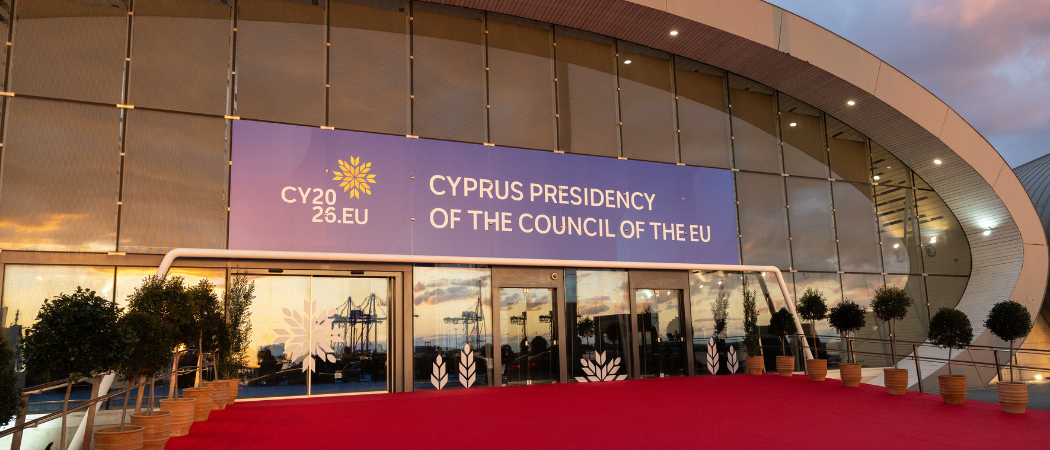
Photo credits: Jennifer Jacquemart / European Union
The Cypriot presidency of the EU Council has published its figures for beginning talks between governments over the bloc’s next long-term budget, for 2028-34. These would see Horizon Europe and the European Competitiveness Fund (ECF) hit particularly hard, with 4% cuts across the board relative to proposals from the European Commission.
The so-called negotiating box, which is a first basis for discussions at a meeting of EU leaders on June 18-19, puts forward €167.9 billion for Horizon Europe, below the €175 billion proposed by the Commission and far below the €200 billion proposed in the European Parliament’s first draft report.
In the Cypriot proposal, Horizon Europe and the ECF are cut by about 4% relative to the Commission proposal.
Erasmus+ could also see its budget cut from €40.8 to €39.1 billion.
ECF cuts
In the proposal, the ECF will be structured around four policy areas. The full breakdown in the Council text is as follows, with the comparison to the Commission’s proposal in brackets:
- Clean transition and industrial decarbonisation: €25.1 billion (€26.2 billion)
- Health, biotech, agriculture and bioeconomy: €21.7 billion (€22.6 billion)
- Digital leadership: €52.6 billion (€54.8 billion)
- Resilience and security, defence industry and space: €125.4 billion (€130.7 billion)
The proposal represents a stark contrast with the political focus, at both EU and national level, on the importance of European competitiveness and investing in the technologies of the future.
Related articles
- Horizon Europe budget to double, but €68B will remain in Competitiveness Fund
- European Parliament prepares for FP10 budget fight
- MEPs adopt long-term budget report with €200 billion for next Horizon Europe
Over the last two years, EU policy debates have been dominated by Mario Draghi’s report on European competitiveness, which called for a massive increase in investment, including €200 billion for the next Horizon Europe.
As often in Council negotiations, research and technology appear to be the most likely candidates for the chopping block. Politically, these areas are easier to cut than cohesion or agriculture, as they don’t guarantee each country a return on investment.
“We reject the Council’s proposal, which is simply not fit for today’s realities,” Siegfried Mureșan and Carla Tavares, Parliament’s co-rapporteurs for the budget, said in a statement.
René Repasi, Parliament’s lead rapporteur for the specific programme implementing the next Horizon Europe, previously warned the research community that it would be a challenge just to get capitals to agree to €175 billion for research and innovation.
Editor’s note: This article was updated 11 June 2025 to correct figures that were previously presented in 2025 prices. All figures in the story are now calculated in current prices.


 Receive the Funding Newswire [full access requires a subscription] each Tuesday, our Policy Bulletin each Thursday, and the fortnightly R&D Express, tracking reforms and investments in central and eastern Europe.
 A unique international forum for public research organisations and companies to connect their external engagement with strategic interests around their R&D system.