External experts would make up for a lack of knowledge and initiative in the Commission, says Parliament’s lead rapporteur
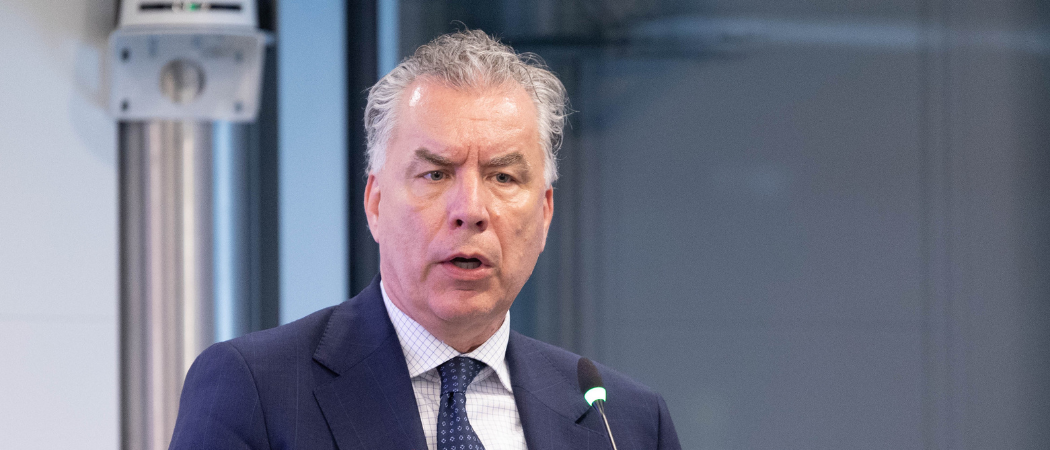
MEP Christian Ehler. Photo credits: Eric Herchaft / European Union
Christian Ehler, the European Parliament’s lead rapporteur on Horizon Europe, has renewed his call for councils of independent experts to oversee the next Horizon Europe research programme, arguing that they are needed to make up for deficiencies in the European Commission.
Addressing the annual conference of the European Association of Research and Technology Organisations in Brussels on June 10, Ehler said that officials in the Commission’s research directorate lacked both the knowledge and the initiative to take the programme where it needs to go.
“Orchestrating [the innovation ecosystem] requires a deep understanding of the underlying technologies and the nature of the companies involved,” Ehler said. This is “not something that can be done by general civil servants.”
As well as lacking the necessary knowledge to design calls for proposals and write effective work programmes, Ehler criticised Commission officials for being too invested in the bureaucratic process. “You have a very static situation where public servants are pretty much saying: if the call gets started [and] the money is spent properly, then it is going to be fine,” he said.
Instead, they should be more reactive to changes in the technology landscape, and willing to redefine calls if they start to look like dead ends. “But right now, once the call has been placed [. . .] you ride the horse to the deadly end,” he said.
In his work on the Horizon Europe proposal, Ehler has suggested that two councils of experts from science, innovation, industry and civil society be appointed for five years to advise on the design of calls for collaborative research and innovation. One council would focus on European competitiveness, the other on global societal challenges. Together they would steer Horizon Europe based on tangible outcomes, he said.
This idea was initially put forward in 2024 by the Heitor group, which was tasked with advising the Commission on the shape of the next Horizon Europe. The Commission did not pick up the suggestion in its 2025 proposal for the programme, but Ehler has brought it back in his report on the legislation for the Parliament’s research and industry committee.
Senior Commission officials have pushed back, saying that the councils would add complexity to Horizon Europe, but Ehler is sticking to his guns.
During his speech, Ehler drew attention to declining expertise in the research directorate following the 2021 transfer of operational management of EU research and innovation funding to external agencies. This left the research directorate free to concentrate on policy, but undermined its reason for being. “It was never meant to be a directorate general,” he said.
His latest intervention may touch a nerve because the research directorate is rumoured to be among the Commission services slated for inclusion in “DG Invest,” a proposed super-directorate covering all EU investment activities. This would dilute its expertise even further.



 Receive the Funding Newswire [full access requires a subscription] each Tuesday, our Policy Bulletin each Thursday, and the fortnightly R&D Express, tracking reforms and investments in central and eastern Europe.
 A unique international forum for public research organisations and companies to connect their external engagement with strategic interests around their R&D system.