But top advisor Manuel Heitor thinks his idea of expert councils to steer collaborative research will win political support in the end

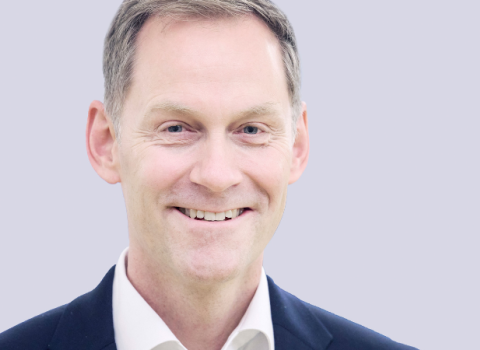
Marc Lemaître, head of the European Commission’s directorate-general for research and innovation. Photo credits: Lukasz Kobus / European Union
The European Commission’s top research official has rejected the idea of setting up expert councils to steer collaborative research in the next Horizon Europe programme. But Manuel Heitor, the senior advisor who made the suggestion in the first place, thinks there is enough political support to push the councils through.
Appearing before the European Parliament’s research committee on March 24, Marc Lemaître, head of the Commission’s directorate general for research and innovation (DG RTD), said the councils would add “more complexity, heaviness and costly coordination, while undermining Commission implementation prerogatives and financial accountability.”
Instead, experts from academia and industry should be involved via a planned observatory of emerging technologies, a strategic stakeholders board in the European Competitiveness Fund (ECF), and “thematic platforms,” he said.
The councils were first proposed by an expert group on the next Horizon Europe, also known as Framework Programme 10 (FP10), led by Heitor at the Commission’s request. The Commission chose not to adopt the idea in its draft legislation on FP10, released in 2025, but it has now been reintroduced by MEP Christian Ehler, the Parliament’s lead rapporteur on the legislation.
Despite the push-back from Lemaître, Heitor still believes Ehler’s suggestion will receive backing at the highest political level. “Marc Lemaître does not represent the European Commission, at least not the political part of the Commission,” he told Science|Business.
Both research Commissioner Ekaterina Zarahieva and Commission President Ursula von der Leyen come from political parties in the European People’s Party (EPP) family.
Heitor also praised the work of Ehler, fellow rapporteur René Repasi and other MEPs in building political support for his group’s recommendations. In the EU Council, Ehler’s EPP and Repasi’s Socialists and Democrats together represent a slim majority of EU governments. “I’m sure most of the prime ministers at Council level will adopt this,” Heitor said of the proposal for expert councils.
According to one member state diplomat, however, research is traditionally a bipartisan topic in the Council, with national governments more likely to align over joint interests or circumstances such as industrial development or scientific strengths, rather than political ideology. Research and innovation policy is also primarily evidence-based, “so ministers usually trust their ministry experts,” the diplomat said.
Heitor also countered Lemaître’s claim that expert-driven governance would add complexity, calling it “completely wrong.” Previous efforts to simplify Horizon Europe funding have brought down administrative costs for the Commission, but increased transaction costs for beneficiaries who are increasingly turning to external consultants, Heitor said.
The best way to simplify funding and reduce transaction costs, he went on, is to replicate the European Research Council (ERC) model and allow experts to decide which types of projects should be funded.
In the current Pillar 2 of Horizon Europe, funding is often distributed across a large number of small projects involving large consortiums, but this is not the best way to address scientific, industrial or societal challenges, he said. “It is the result of a lack of adequate expertise in the programming combined with different kinds of ‘pressures’ applied by national delegations on the Commission services.”
Clarifications to come
During the debate, Ehler reiterated his support for expert-led governance in Pillar 2, saying this would maintain the agility to launch calls quickly and change the direction of projects if needed. “Agility does not mean budget flexibility to shift money between political priorities as the Commission proposes,” he said. “Agility means ensuring calls and projects are at the frontier of science and technology.”
While Lemaître pushed back against the idea of expert councils, he acknowledged “the need for further clarity and discussions” and promised to provide a “detailed fiche” on governance in the coming weeks. A lack of detail on governance and priority setting is one of the key issues holding up negotiations between EU governments as they look to reach a partial agreement on their negotiating position by the end of May.
Lemaître also defended the Commission’s plans to integrate Pillar 2 calls into the ECF work programmes. This will ensure “a strong, dedicated [research and innovation] component without subordination, and common priorities for formally 15 different programmes,” he said.
In contrast, MEPs and the research community want separate work programmes for Horizon Europe calls. Ehler, who is also co-rapporteur for the ECF legislation, said he would propose including in each ECF policy window a dedicated part for deploying and scaling up Horizon Europe results.
Broad alignment
While members of the research committee called for further discussion on topics including EU missions and the risk of conflicts of interest emerging from expert-led governance, they were broadly supportive of the two draft reports.
“It was genuinely encouraging, and quite rare, to see such broad alignment across political groups,” said Silvia Gomez Recio, secretary general of the Young European Research Universities Network. “For the first time in months, the discussions are moving in the right direction.”
Centring Pillar 2 inside Horizon Europe with its own governance, along with the central role given to experts “sends a strong signal of trust in those who are best positioned to identify and address both current and future challenges,” she added. “The European Commission, and in particular DG RTD, should recognise how valuable it is to have such committed MEPs and strong defenders of the research Framework Programme.”
Related articles
- Research lobbies reject reassurances over Horizon Europe budget reshuffle
- MEPs push for independent, expert-driven Horizon Europe
- Cutting term of ERC president ‘not essential,’ Commission official says
Lemaître “clearly set the Commission up for a fight against the European Parliament on the governance of FP10,” said Jan Palmowski, secretary general of the Guild of European Research-Intensive Universities, who agrees with Ehler’s conclusion that more expert input is needed.
“The Commission has addressed this in different ways in Horizon 2020 and in Horizon Europe, but neither approach has really worked as well as it should have,” Palmowski said. “The need for experts to frame the content of FP10 meaningfully will be all the greater because its political direction will be so much stronger.”
Open to debate
On other aspects of the Parliament reports, Lemaître showed more openness to discussion. He said the Commission is “exploring” MEPs’ suggestions for strengthening the autonomy of the European Research Council and the European Innovation Council (EIC). “The Commission has been and will remain a staunch guardian of [the ERC’s] independence,” he added.
On a controversial proposal to reduce the term of the ERC and EIC presidents from four years, renewable once, to two years, renewable once, Lemaître said the aim was to avoid tenures that run for longer than the EU’s seven-year budget cycle.
The research community was not reassured. Palmowski said he was “astonished” the Commission continues arguing for two-year terms for the ERC president. “Of course it’s an attack on the ERC. It’s completely out of keeping with any other president of a prestigious research council in Europe.”
Meanwhile, the Commission is uncertain what Ehler’s suggestion that all defence research be exclusively funded by the ECF would mean for the EIC’s architecture, but it is “ready to explore” this option, Lemaître said.
Likewise, Repasi’s proposal to introduce a new instrument in the ERC called sectoral plans, developed by a number of research institutions from a specific sector and with a pre-allocated budget, is “worth discussing,” Lemaître said, “but we should stay away from institutional support.”
Power struggle
Repasi, who is rapporteur on the specific programme covering implementation measures, said his negotiating team would work closely with Ehler, the rapporteur for the Horizon Europe regulation, with both texts treated as a package.
While the Parliament has a key role in negotiating the regulation, the specific programme is adopted via a Council decision. For the latter, the Council and Commission “are only waiting for us to have voted and afterwards they can forget our suggestions,” Repasi said.
To get around this issue, towards the end of the process, certain amendments relating to highly political issues will be moved from the specific programme into the regulation so that they can be treated under the ordinary legislative procedure, he said. He did not specify which issues he was referring to.
MEPs have until April 9 to table amendments to the Ehler and Repasi reports.


 Receive the Funding Newswire [full access requires a subscription] each Tuesday, our Policy Bulletin each Thursday, and the fortnightly R&D Express, tracking reforms and investments in central and eastern Europe.
 A unique international forum for public research organisations and companies to connect their external engagement with strategic interests around their R&D system.