European Open Science Cloud Association (EOSC-A) proposes dedicated partnership in the next funding framework
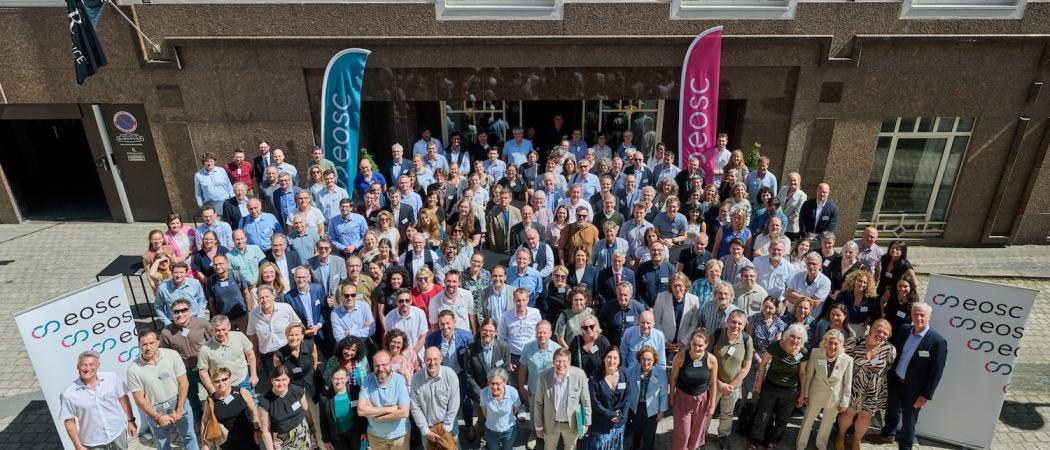
Photo credits: Photographs by PRYZM • Valentyna Rostovikova
The European Open Science Cloud (EOSC) is an EU-led initiative to create a unified digital environment where researchers across Europe can store, share, access and reuse research data and outputs. Initiated in 2015, EOSC has spent a decade developing an interconnected ecosystem of existing research infrastructures, repositories and services.
Now, as a direct response to the ongoing EU-wide negotiations on the proposed 10th Framework Programme for Research and Innovation (FP10), the organisation unanimously adopted a position paper outlining its vision for EOSC’s future.
In the position paper, the EOSC-A calls on decision-makers to support the establishment of a distinct Work Programme-based Partnership for EOSC under FP10, with EOSC-A as an equal partner alongside Member States, Associated Countries, and the European Commission within the Partnership's tripartite governance.
Strong commitment to open science
The paper has been endorsed by all of the 250 European research-performing organisations, university alliances, research service providers, research infrastructures, and research funders that make up the EOSC-A membership.
“These organisations represent the scientific community, and the voice of the community should be represented in the governance structure,” emphasises EOSC-A President Klaus Tochtermann. “The unanimous decision shows that there is a strong commitment from the organisations to EOSC and the EOSC Association. It's also important to point out that others, aside from the EOSC Association, have called for the same goal.”
This commitment is also evident through the EOSC-A members’ combined contributions. “For 2026 alone, the members estimate to contribute over €376 million, with more than 3,100 full-time equivalents working on EOSC's development. For 2027, members plan to commit over €451 million in-kind,” shares Tochtermann.
To fully capitalise on this significant investment by the EU and the participating states, the EOSC-A says Europe needs to establish the governance framework to enable the initiative to mature. “We're on an upward growth trajectory,” notes Bob Jones, special envoy for the EOSC Federation at the EOSC Association. “We have shown that there is a lot of engagement from Member States and the research community. We are starting to have a positive impact on the daily lives of researchers in Europe.”
The EOSC Federation, launched in 2025, expanded significantly in 2026 with the endorsement of 14 new candidate nodes — and Jones sees that momentum as both an argument and an obligation. “We are on the cusp of a big milestone. We have done all the hard work. Now, let's reap the benefits.”
Strategic necessity for data sovereignty
The EOSC-A is making the case that open science infrastructure is not a nice-to-have, but a strategic necessity — for Europe’s data sovereignty, AI competitiveness, and scientific excellence.
The position paper argues that “anchoring EOSC in FP10 will enable researchers to conduct better, faster, and more scalable interdisciplinary research across borders while ensuring Europe retains trusted, sovereign access to the FAIR data required for scientific excellence and AI-driven innovation.”
“We could offer ready-made solutions to researchers and contribute to many goals of the EU,” adds Jones. “We could make research across Europe more collaborative. At the moment, we see that there is willingness among researchers to collaborate, but they lack the tools to do so. EOSC gives them the solution. We can support Europe in implementing policies related to open science.”
Moreover, EOSC is important for AI-driven innovation, as well as data management. “AI needs data, and data comes from EOSC,” says Tochtermann, adding that EOSC is aligned with several AI strategies including the European Commission's AI for Science Strategy. “EOSC is seen as an important data space needed for research and innovation. EOSC is where the data is.”
Tochtermann notes that a significant proportion of research data is not AI-ready - a challenge EOSC is working to address. “AI tools are only as good as the data you put into them — and EOSC has high-quality data,” adds Jones.
Risk of fragmentation across Europe
Without a dedicated partnership, EOSC risks losing the stable, structural funding that makes long-term development possible and being forced back onto project-by-project financing — a precarious basis for infrastructure of this ambition.
“It would be difficult to develop at the same pace, and it would hinder the work of researchers,” emphasises Jones. “We would also risk fragmentation across Europe, as each country would need to come up with their own solutions. This would be a missed opportunity.”
EOSC currently finds itself at a critical juncture: on the threshold between prototype and production. The infrastructure has been built and tested; the federation is expanding; use cases are accumulating in life sciences, high-energy physics, marine biology, and beyond. What is needed now, both Tochtermann and Jones argue, is the institutional certainty to scale.
“This is a great opportunity for Europe to build on its advances, on its advantages and its diversity,” says Jones. “The cost of having EOSC is much lower than not having it. There have been significant investments made to support EOSC. The partnership would give us the framework for these investments to materialise.”
Tochtermann also stresses the wide reach of EOSC. “Community matters,” he says. “We represent the scientific community in Europe. That’s why it’s so important to be granted partnership. EOSC is a sociotechnological infrastructure, which represents all researchers, domains and disciplines. There is no other partnership with such a cross-cutting added value.”

 Receive the Funding Newswire [full access requires a subscription] each Tuesday, our Policy Bulletin each Thursday, and the fortnightly R&D Express, tracking reforms and investments in central and eastern Europe.
 A unique international forum for public research organisations and companies to connect their external engagement with strategic interests around their R&D system.