Innovator network goes bankrupt after EU agency withheld funds amid a months-long fraud investigation

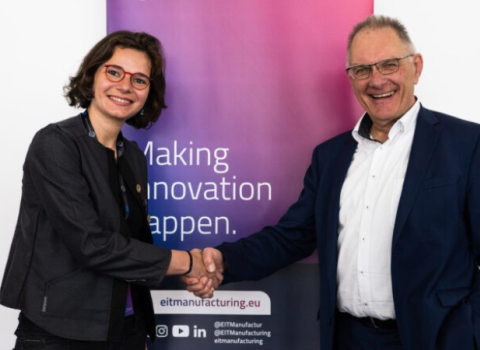
Photo credits: European Institute of Innovation and Technology
EIT Manufacturing, the EU-funded knowledge and innovation community for the manufacturing sector, has filed for liquidation on March 25 after going bankrupt following a months of fallout from an investigation by OLAF, the EU anti-fraud office.
The European Institute of Innovation and Technology (EIT), the EU agency that finances EIT Manufacturing, had withheld payments from the network after OLAF found irregularities in EIT Manufacturing's financial reporting. OLAF detailed its findings in a report dated September 2024.
“The OLAF report identified serious irregularities in the implementation of certain calls for proposals and selection of projects for funding,” said EIT spokesman Balint Linder. “As a consequence, the EIT then took swift action to safeguard EU funds,” he said.
As a result, EIT Manufacturing has been unable to make payments to its beneficiaries, leaving start-ups, universities and other innovators without millions in promised financing for months.
The situation took a turn for the worse this week, when EIT Manufacturing finally ran out of money and had to file for liquidation. The news comes after several months of back and forth between the parent agency and the network.
According to internal emails seen by Science|Business, the EIT had confirmed it would allocate €163 million in funding to EIT Manufacturing at the end of 2025 to ensure the community could continue to operate. But the money was contingent on the network improving its financial controls and showing progress towards tackling the alleged fraud.
Before further steps were taken, in December 2025, the EIT received another report from the fraud investigation office that showed further irregularities. The spokesman said the report showed that the irregularities “went beyond those identified initially.”
EIT Manufacturing argued it had fulfilled the conditions, but the EIT postponed an allocation of funds foreseen for February 2026.
As EIT Manufacturing had not received any funding since June 2024, the leadership decided to secure a bank loan to buy itself some time. But the bank needed a confirmation letter from the EIT that the money would be coming, a request that the parent agency could not accommodate.
Related articles
- EIT Manufacturing looks to establish new legal entity, CEO says
- EIT board makes case for continued existence in FP10
Damage control
Without a loan, EIT Manufacturing was forced to file for liquidation. Its outstanding financial obligations reach €15 million in funding to 200 beneficiaries. According to the EIT, some of the most vulnerable beneficiaries, such as start-ups, were given grants, with payments authorised by the central agency.
Now, the EIT promises to step in and try to shoulder some of the fallout. “While the exact implications are still unclear, we are particularly mindful of the impact on start-ups and other beneficiaries,” said Linder. “We are actively exploring ways to keep on supporting innovation and skills in Europe’s manufacturing sector.”
The EIT has also requested EIT Manufacturing to clarify the next steps to help ensure that projects and legitimate claims by final beneficiaries are not affected, Linder added.
All this comes as the EIT faces an uncertain future in the next EU budget cycle, due to start in 2028. The agency, which has funded sectoral innovation networks since 2008, was not mentioned in the European Commission’s proposal for the next EU research programme Horizon Europe. MEPs in the European Parliament’s research and industry committee are pushing for the EIT to continue beyond 2027, but the matter has not been settled yet..
The EIT has been actively advocating EU policymakers to recognise its achievements, including adopting its own vision for a revamped EIT.
Editor's note: EIT is a member of the Science|Business Network.
This article has been updated 2 April 2026 to clarify that OLAF shared its report on EIT Manufacturing in September 2025.


 Receive the Funding Newswire [full access requires a subscription] each Tuesday, our Policy Bulletin each Thursday, and the fortnightly R&D Express, tracking reforms and investments in central and eastern Europe.
 A unique international forum for public research organisations and companies to connect their external engagement with strategic interests around their R&D system.