MEPs and ministers express concern that health priorities such as brain cancer research will be squeezed out by geopolitics
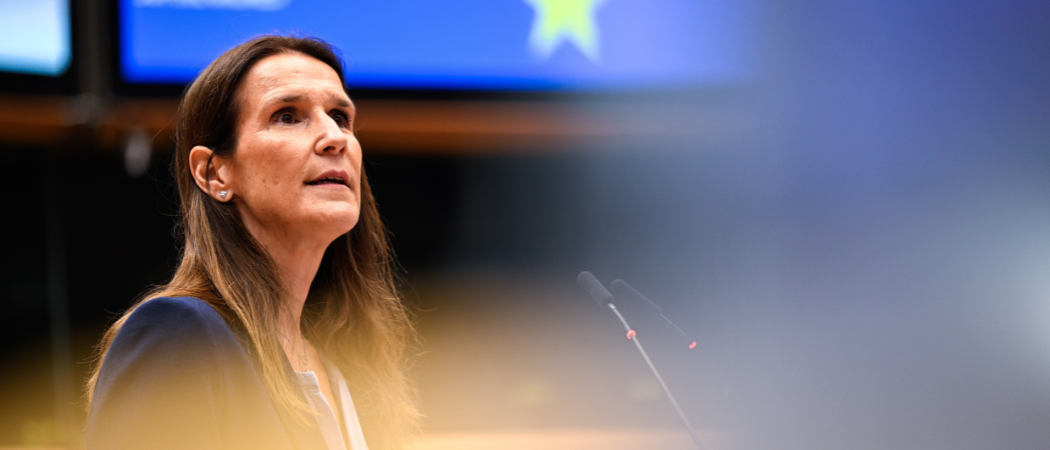
Sophie Wilmès, vice-president of the European Parliament. Photo credits: Laurie Dieffembacq / European Union
A push has begun to safeguard funding for health in the next long-term EU budget, with MEPs and national lawmakers expressing concerns that geopolitical priorities may set the agenda.
“There is a real danger that EU funding for health will be lost, in a sense, in the reorganisation of the budget, that there will be no identifiable EU budget for health and that there will not be sufficient money,” said Frank Vandenbroucke, deputy prime minister of Belgium and federal minister for public health, at a meeting in the European Parliament on June 8 to discuss brain cancer research.
“The reinforcement of our security and industrial competitiveness is essential, but it would be a mistake to oppose health to security, or research to competitiveness,” said Olivier Chastel, a Renew group MEP and longstanding advocate within the Parliament for health.
His party’s leadership is also on board. “We are going to try to move in the direction of identifying more budget lines to make sure that the money goes where we believe it has to go,” said Sophie Wilmès, one of the vice-presidents in the Parliament.
Chastel, who wants the funding ambition of Horizon Europe and its Cancer Mission to be preserved, underlined the need to back innovative healthcare approaches, from nuclear medicine to radioligand therapy. “For these technologies to reach their potential, Europe must invest in research, in the production of medical isotopes, and in the supply chains necessary for their deployment,” he said.
The meeting also heard from European Commission President Ursula von der Leyen, who related the experience of losing her 11-year-old sister to a reticular sarcoma when she was 13. “We must act faster and more efficiently, particularly when it comes to developing treatments,” she said.
She went on to describe the EU’s plan for beating cancer, which was launched in 2021 with a €4-billion budget, including €600 million for research projects, and the contribution of other measures. “The European Biotech Act [. . .] will help accelerate and simplify approvals for clinical trials,” she said.
Data sharing
One focus of discussion at the meeting was the need to remove complex, fragmented regulations, for example on data sharing. “We have so many examples where we wanted to exchange data with colleagues from Denmark, from France, from Belgium etc. We really gave up after two years of discussion with legal departments,” said Felix Sahm, chair of the department of neuropathology at Heidelberg University and Heidelberg University Hospital.
“Better data-sharing means better understanding and better treatment, especially in the age of AI,” von der Leyen said. “We are sitting on a wealth of data, and with the highest standards of privacy, we can use this data.”
According to Vandenbroucke, the EU must first overcome “a kind of resistance” to the pooling and use of data that generally stems from fears regarding privacy infringement, surveillance and loss of control over personal information. “The EHDS strikes the right balance between concerns with privacy and the potential of data solidarity,” he said, referring to the European Health Data Space, which as a minister he helped negotiate.
Related articles
- Funding radar: €30M brain health challenge for innovators
- Viewpoint: neurotechnology deserves an EU research moonshot
For Chastel, European data cooperation is all the more important in the area of brain cancer because the disease is profoundly heterogeneous. “No patient should be left out because their disease is rare,” he said. “Tomorrow, interoperable European registers combining clinical, biological, genomic and imaging data will accelerate the development of new treatments, improve diagnostics and open more clinical trials to patients living anywhere in the EU.”
Pauline Crucis, an ambassador to the Paris Brain Institute, called for political action to match the urgency of the public health challenge, citing the progress made over the past 50 years treating breast cancer and metastatic melanoma. “These examples remind us that when researchers are given the necessary resources, they do find solutions,” she said during the conference. “What is missing is a political commitment at both national and European levels to match their ambition.”


 Receive the Funding Newswire [full access requires a subscription] each Tuesday, our Policy Bulletin each Thursday, and the fortnightly R&D Express, tracking reforms and investments in central and eastern Europe.
 A unique international forum for public research organisations and companies to connect their external engagement with strategic interests around their R&D system.