Experts make the case for sustained EU funding for global health, as R&I in neglected areas can deliver significant societal and economic returns
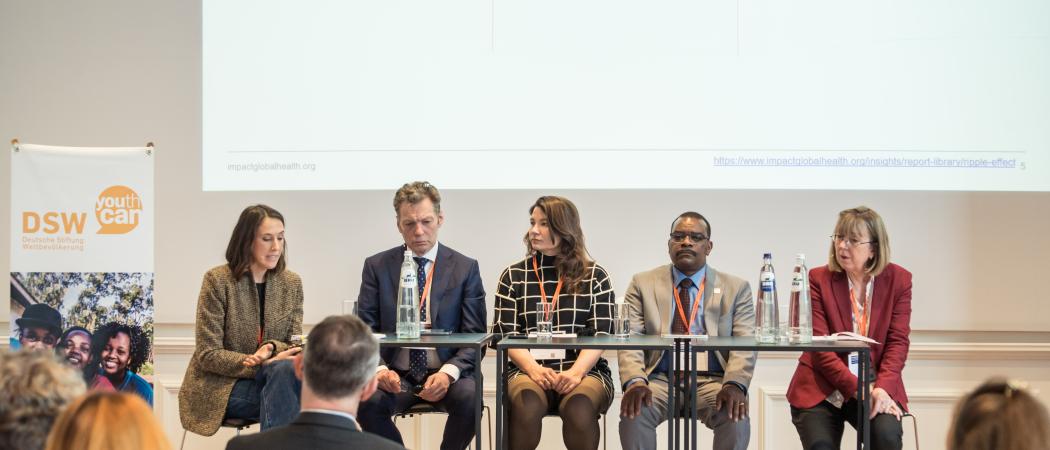
From left to right: Céline Aerts, Economist and Analyst, Impact Global Health; Frank Cobelens, Professor, Amsterdam University Medical Centre; Lisa Goerlitz, Head of EU Advocacy and Brussels Office, DSW; Michael Makanga, Executive Director, Global Health EDCTP3; Jutta Reinhard-Rupp, Chief Scientific Officer, FIND
Major areas of global health remain systematically overlooked. Experts blame market failures and the fact that many diseases predominantly affect marginalised populations in low- and middle-income countries. Public investment could, however, catalyse breakthroughs with global relevance and benefit Europe as well.
“Investing in global health R&I benefits everyone. It pays off both domestically and globally,” noted Céline Aerts, senior analyst & impact lead at Impact Global Health, during a panel discussion at the Science Business annual conference. Held in partnership with the global health NGO DSW, the panel highlighted the importance of R&I in health areas long described as “neglected”, including infectious diseases and women’s health.
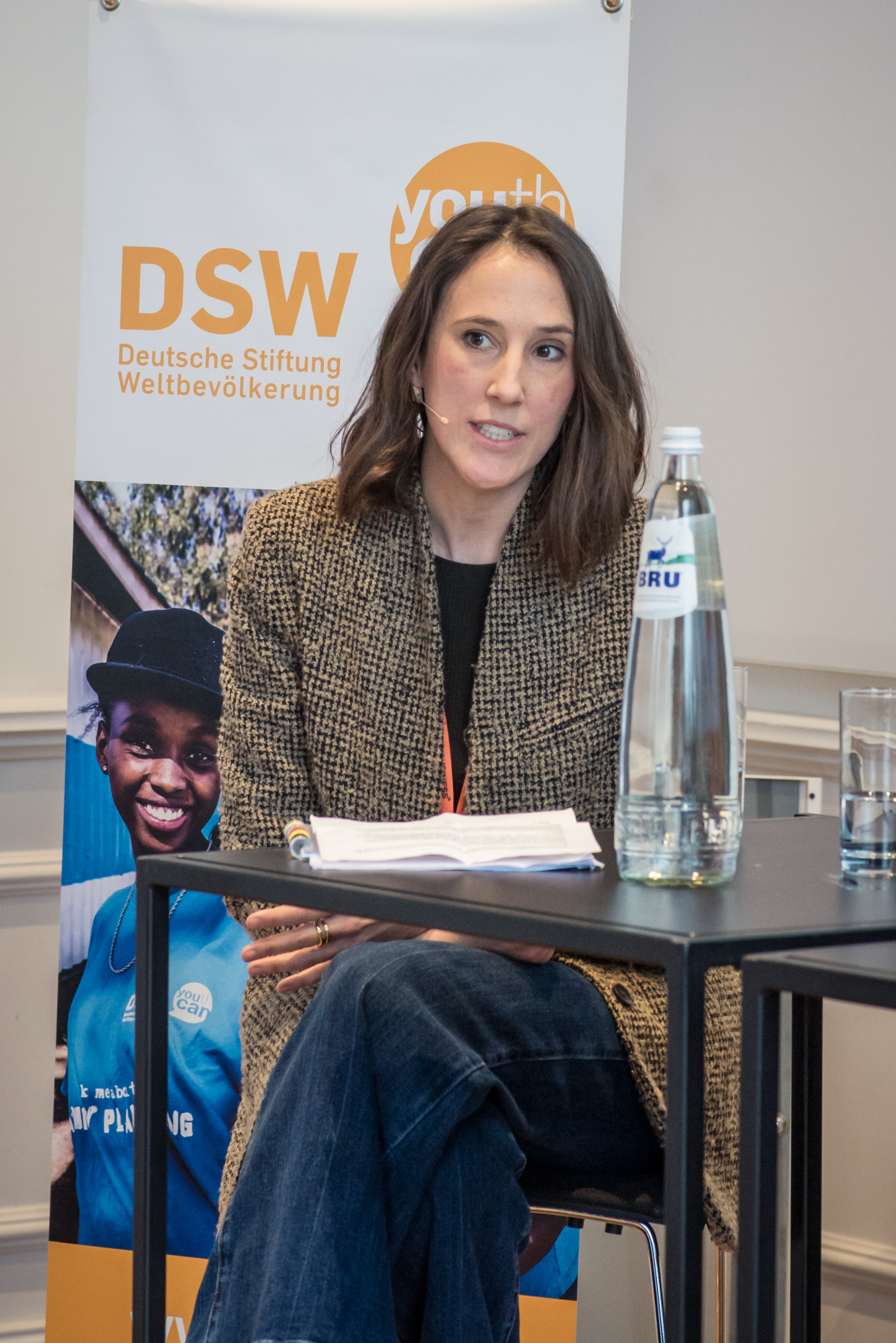
“Global health R&I doesn’t only save lives abroad, but also delivers tangible returns at home,” emphasised Aerts, underlining the significant returns on public investment. “For every euro invested in R&I for neglected diseases, there is the societal return of €405”, added Aerts. That figure is based on Impact Global Health’s modelling of the years of life saved from breakthrough drugs, diagnostics, vaccines and vector control products to tackle poverty-related neglected diseases.
As the panellists pointed out, research originally focused on global health and low- resource settings has repeatedly produced innovation spillovers that benefit high income countries. For instance, platforms originally developed for tropical diseases, such as Ebola and malaria, were rapidly repurposed during the COVID-19 pandemic. As another example, Impact Global Health estimates that by 2050, the Shingrix vaccine – which was developed using technology for a malaria vaccine - will avert 17 million shingles cases in the European Union, potentially saving US$11 billion for the health system.
Europe has the capacity to lead
Atop of economic benefits, international cooperation is key in producing excellent science, which places Europe at the forefront of medical innovation. “There is serendipity in research,” noted Frank Cobelens, professor of global health at the Amsterdam University Medical Centres and co-founder of the European Global Health Research Institutes Network (EGHRIN). “Global health is not just about helping people in low-income countries. It’s not only about doing good. It’s also about doing important research. Europe must embrace global health as a pillar of science diplomacy. This is also crucial for preparedness.”
“Open and international cooperation must be the base of research and innovation,” agreed Michael Makanga, executive director of Global Health EDCTP3, a joint undertaking under Horizon Europe which funds collaborative projects tackling infectious diseases and research capacity building in partnership with more than 30 African countries. “Global cooperation is far from outdated. If anything, it is more essential.” Europe has the capacity to lead in this regard, added Makanga. “When it comes to science and global health cooperation, Europe doesn’t need to choose between projecting strength and projecting its values.”
Makanga pointed out that, thanks to the EU’s investments in global health infrastructure, Global Health EDCTP3 has been able to deliver numerous medical solutions to fight neglected diseases in Africa. Its success stories include a new treatment for schistosomiasis in preschool-aged children and the development of fexinidazole, the first all-oral, patient-friendly cure for sleeping sickness.
“High risk to be a woman”
Although the term “neglected health” is often associated with infectious diseases in low-income countries, it also applies to aspects of health that have historically fallen outside commercial and policy priorities. One such area that has been persistently neglected in R&I is women’s health. In fact, only 1% of global healthcare R&I is dedicated to female-specific conditions, despite the fact that women spend 25% more of their lives in poor health compared to men.
“Talking about women’s health being neglected while we represent 50% of the population is completely unacceptable,” said Jutta Reinhard-Rupp, chief scientific officer at FIND, highlighting the need to advocate for this topic. “My conclusion is that it is high risk to be a woman. This issue is so fundamental that I wonder why it took us until now to bring it up,” added Reinhard-Rupp, who further emphasised that public funding is crucial to facilitate private sector engagement and address the absence of markets for neglected areas.
FP10 should be shaped differently
As the EU begins to shape its next flagship research and innovation programme (FP10), policymakers have an opportunity to embed a more inclusive and impact-driven vision of health R&I, noted moderator Lisa Goerlitz of DSW. “The challenges we face today cannot be solved with the solutions we have right now.” It isn’t possible to solve neglected diseases, nor fill the gender health gap, with the tools available today, she added. “They have too many side effects, are ineffective or simply don’t exist.”
Consequently, FP10 should be “shaped differently” to ensure that the health research budget is ringfenced, and that public funding brings solutions to global societal challenges, added Goerlitz, who serves as head of EU advocacy at DSW. “Innovation only happens in the area where there is market. In other areas, we need help from the public sector.” To this end, DSW has published ten guiding principles to ensure FP10 promotes economic, social and ecological sustainability by delivering on the EU’s health agenda.
In essence, R&I in neglected areas of health should be reframed as a strategic opportunity, stressed Goerlitz, highlighting the need to show the value of filling these gaps through R&I in FP10. “The investment in global health should not be seen as a cost.”



 Receive the Funding Newswire [full access requires a subscription] each Tuesday, our Policy Bulletin each Thursday, and the fortnightly R&D Express, tracking reforms and investments in central and eastern Europe.
 A unique international forum for public research organisations and companies to connect their external engagement with strategic interests around their R&D system.