The former deputy minister of health explains the country’s ambitious innovation goals, and why AI and digitalisation lie at their heart
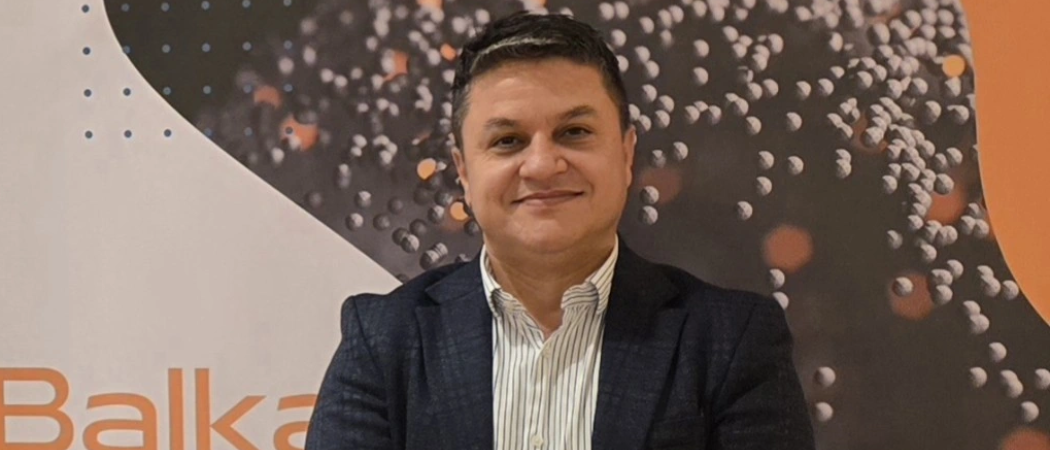
Niko Hyka is a professor at the University of Medicine in Tirana, an expert in innovation and AI applications, and Albania’s former deputy minister of health and social protection
Albania is looking to bolster its research and innovation performance and, in order to benchmark improvements, has set the goal of climbing the rankings of the European Innovation Scoreboard (EIS).
The western Balkan country, a leading candidate to become the next EU member state, has set the target of becoming a “moderate innovator” on the scoreboard by 2027. The EIS, compiled yearly by the European Commission, places countries into four categories: innovation leaders, strong innovators, moderate innovators, and emerging innovators.
Albania is currently an emerging innovator and is ranked fifth from bottom out of all EU member states and neighbouring countries. It is, though, ranked ahead of EU state Romania, as well as Ukraine, Bosnia and Herzegovina, and Moldova.
The government has devised an action plan to climb the rankings, with plans to further digitise the country and support its further involvement in European research and education programmes, such as Horizon Europe and Erasmus+.
The country’s scoreboard performance is gradually improving, and is up 7.4 points since 2018 and 4.4 points since 2024.
But there are still many challenges, including low R&D expenditure in the public and private sectors, a low number of international scientific co-publications, and public-private partnerships.
To better understand Albania’s motivation to climb the EIS rankings, Niko Hyka, a professor at the University of Medicine in Tirana and former deputy minister of health and social protection, shares his thoughts on the action plan, what the country is doing to achieve it, and how he envisions the future of Albania’s innovation landscape.
Why has Albania set the goal of improving its position in the EIS?
The reasons for adopting the plan are closely linked to Albania’s broader transformation into a more digital, service-oriented state. A powerful example is e-Albania, launched in 2015, which has shifted a large share of public services online and has helped standardise administrative processes for citizens and businesses. This kind of reform matters because it builds the infrastructure of a modern innovation system with things like interoperable data, digital identity, streamlined public services, and a governance culture that can implement technology at scale.
From there, Albania’s Digital Agenda (2015-2020, 2022–2026), which is aligned with the orientation of the EU’s Digital Decade, positions digitalisation not only as a public-service upgrade, but as part of the country’s competitiveness and convergence pathway with Europe. In other words, Albania is using digital reforms as a policy lever to modernise institutions, improve the investment environment, and accelerate innovation adoption in both the public and private sectors.
This is exactly where the EIS action plan comes in. The EIS is not simply a league table, it is a structured framework of indicators that exposes where an innovation system is strong and where it is fragile. Albania’s performance gaps relate to classic constraints for emerging innovation economies, such as low R&D spending, limited innovation collaboration among SMEs, weaker internationalisation of advanced human capital, and relatively low exports of medium- and high-technology products.
The action plan to reach the target of a moderate innovator is therefore designed as a practical policy instrument, to translate these weaknesses into targeted reforms, measurable steps and institutional responsibilities so that progress becomes trackable, not just aspirational.
What are some of the measures Albania is putting in place to improve its innovation landscape?
One of the most symbolic examples is the transformation of the Pyramid of Tirana, once a defining monument of the communist era, into a youth-focused innovation and learning hub, where young people can access free coding opportunities and connect with technology initiatives and major companies. It is a visible statement that the country is intentionally pivoting from a legacy of centralised control to an identity built around skills, technology and openness.
In parallel, Albania has used high-profile digital governance initiatives to reinforce this message internationally. The appointment of the first AI-based “virtual minister,” Diella, has contributed, regardless of how one evaluates the policy instrument itself, to a public image of a country that wants to move fast, experiment and position itself as a technology-forward administration.
What are the main challenges facing Albania in terms of its innovation performance?
Albania’s innovation challenge is not simply a matter of adding more start-ups or improving a few indicators. It is a systemic transition challenge because the country is still completing a historic shift from a closed, centralised model to an open innovation economy where the individual, the enterprise and the university become active contributors through technology.
Related articles
- EU candidate countries commit to better integration of R&D policies
- Zaharieva plans ‘ambitious but realistic’ ERA Act
- Western Balkans must address innovation performance to boost competitiveness
It is worth remembering the scale of that transition. Just 35 years ago, Albania was a highly isolated system with tight state control over information, mobility and economic initiative. Moving from that legacy to a model where digital technology enables citizens and businesses to participate directly in public life and economic value creation is a profound transformation. It requires not only infrastructure and funding, but also institutional maturity, trust, skills and resilient governance. That is why implementation, rather than strategy design, is often the biggest bottleneck.
The challenge is to make execution as strong as ambition by strengthening cybersecurity, reducing corruption drag, investing in people, and improving the mechanisms that convert digital progress into measurable innovation outcomes.
What, concretely, is Albania doing about this?
A particularly important development is that the Albanian government, through its national research and innovation support mechanisms, has begun to provide more direct support for institutions and researchers to participate in innovation and research projects. This matters because innovation ecosystems are not built solely through digital services, but also require research capacity, grants, laboratories, doctoral pipelines, industry links and international networks.
However, there are still two structural constraints that continue to slow the pace. One is that financing remains insufficient relative to ambition. Digital transformation and innovation policy cannot deliver fully without sustained funding for R&D, competitive grants, doctoral training, and applied innovation instruments that help SMEs and start-ups scale.
The other is that human capital is under pressure. Albania faces a significant shortage of specialised professionals, particularly in advanced ICT [information and communication technologies], cybersecurity, AI, and research leadership, partly because of sustained emigration. This means the country must work simultaneously on building talent pipelines at home and creating incentives that retain and attract skilled professionals.
How do you see the future of Albania’s efforts to improve its innovation performance?
The way Albania is approaching this is increasingly narrative-driven and strategic. The country is not trying to innovate everywhere at once in an abstract way, but to upgrade the sectors where it already has economic strength, while using digital transformation as a national platform to spread innovation, especially AI across the whole economy.
That digital foundation is now being used to modernise priority sectors, especially those where Albania already has traction, such as tourism, agri-food, ICT and energy.
But the most important element in Albania’s current direction is not only which sectors are prioritised but how Albania wants to upgrade them. The ambition is clearly moving toward the expansion of AI use across as many sectors as possible. Once you have digital services, digital payments, and digital ID, you begin to generate the kind of structured data and interoperability that make AI deployment realistic, not only in private business, but also in government, education, health and compliance systems.
Albania’s innovation success will be measured by whether these priorities translate into concrete instruments such as targeted funding, talent development, stronger links between universities and industry, and the institutional capacity to move from experimentation to routine implementation.
The direction is clear, the next stage is execution at depth and at scale.




 Receive the Funding Newswire [full access requires a subscription] each Tuesday, our Policy Bulletin each Thursday, and the fortnightly R&D Express, tracking reforms and investments in central and eastern Europe.
 A unique international forum for public research organisations and companies to connect their external engagement with strategic interests around their R&D system.