Building European tech champions will require economies of scale and a change in mindset, Science|Business conference hears
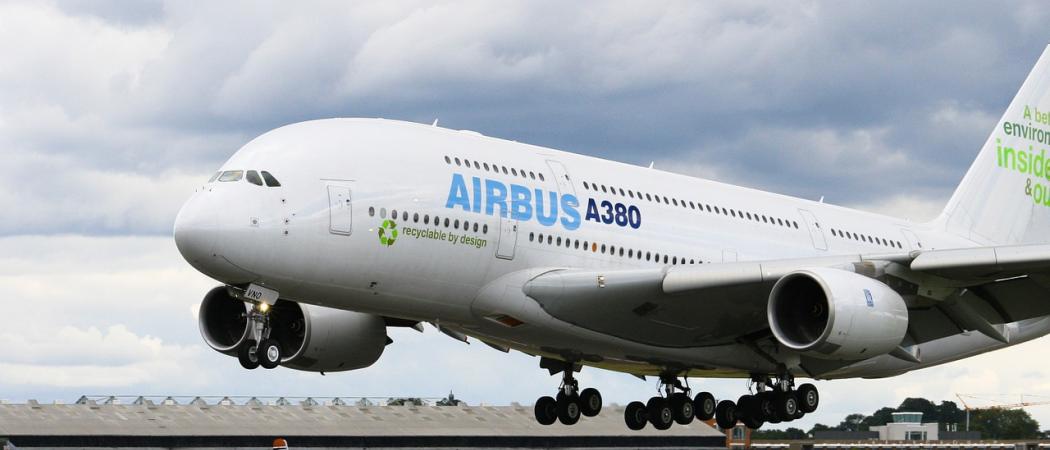
Photo credits: Needpix.com
Europe desperately needs to build its own tech champions, but without economies of scale and political cohesion, a modern Airbus story seems unlikely, according to a panel discussion at the Science|Business conference.
The example of Airbus was raised at the conference by Juha Vartiainen, co-founder of IQM Computers, a Finnish quantum computing company. The European aviation giant was created in 1970 as a partnership between France and Germany, later joined by the UK and Spain, to compete with US companies that dominated aircraft building at the time.
Quantum faces a similar situation today. In the European quantum market, there is a multitude of small companies developing specific technologies and parts. But alone, none of them can compete with US companies, which are already starting to industrialise.
“We could have one very strong European company by merging together a lot of these quantum start-ups,” said Vartiainen. “That would be very beautiful idea: to have a quantum Airbus.”
He acknowledged that the suggestion might sound idealistic, but as competitors on other continents scale up, Europe may have to consider all options if it is to maintain its edge in the market. As competition intensifies, “we should actually very critically think about it.”
Fix the Single Market
A key question is whether the EU Single Market could sustain such an endeavour. In recent years, the Letta and Draghi reports on Europe’s economic stagnation have both highlighted that the bloc’s single market needs an overhaul to address fragmentation, which prevents companies from scaling up on the European market and competing globally, in addition to posing a myriad of other problems.
And economies of scale in the single market are necessary to create true tech champions, suggested José Moisés Martín Carretero, director general of Spain's Center for the Development of Industrial Technology.
Right now, if Europe was to create a quantum super-company, it would require generous investments at the EU level. Politically, this would be a hard sell. Why should Italian taxpayers fund, for example, a quantum Airbus based in France?
“Europe has a problem here with the political economy: is my country, or Italy, or France, or Germany going to allow taxpayers’ money to go massively into other countries?” asked Martín Carretero. With the current level of European cohesion, he doubts it.
Geography is key. In the US, for example, around 60% of unicorns, start-ups valued at over $1 billion, are concentrated in San Francisco and New York City. This is not a problem for tax-payers, because the US is a federal state and around 55% of public spending comes from a federal government. That means that money is redistributed to some extent, which is impossible in Europe.
Martín Carretero is also not convinced that merging companies is the way to go. If they cannot keep up with the global market, the result will be giants but not success. “A coalition of losers is not a European champion,” he said.




 Receive the Funding Newswire [full access requires a subscription] each Tuesday, our Policy Bulletin each Thursday, and the fortnightly R&D Express, tracking reforms and investments in central and eastern Europe.
 A unique international forum for public research organisations and companies to connect their external engagement with strategic interests around their R&D system.