The Weimar triangle cooperation expands to research, as Germany’s DAAD invests in a €4.5 million scientific exchange scheme
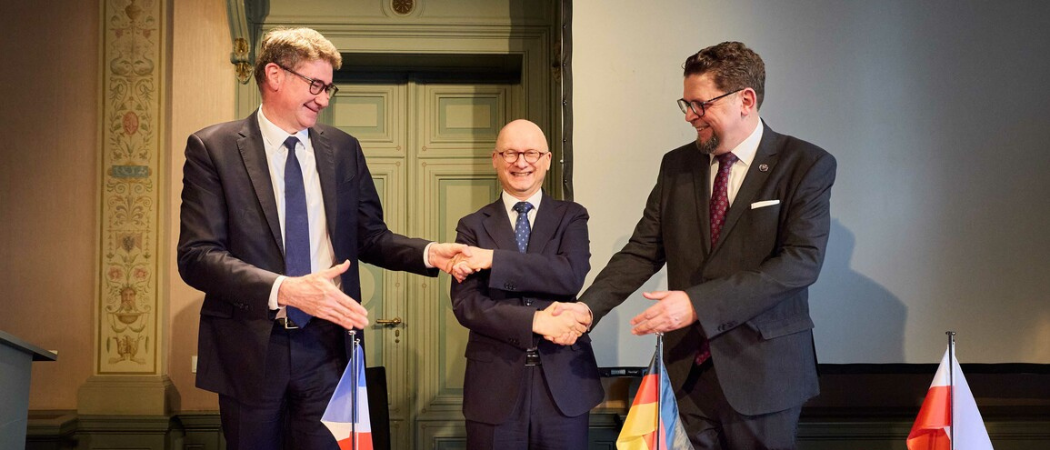
From left to right: Jean-Luc Moullet, director general for research and innovation at the French ministry of higher education, research and space; Marcus Pleyer, state secretary at the federal ministry of research, technology and space in Germany; and Andrzej Szeptycki, undersecretary of state at the Polish ministry of science and higher education, signing a joint declaration of intent to expand the cooperation of their countries in research and innovation. Photo credits: Stiftung Genshagen / René Arnold
The German Academic Exchange Service (DAAD) is set to fund cross-border networks of German, French and Polish researchers, after the three countries agreed to deepen cooperation earlier this spring. Here’s how the Future Network Weimar Triangle scheme will work.
The DAAD’s fund for the cross-border networking initiative is €4.5 million, and is looking to fund around 120 short stays for PhD students and postdoctoral researchers from the three countries by 2029.
Largely in line with Germany’s strategic technology priorities, the programme’s research focus areas are AI, climate technologies, security, biotechnology, digitalisation and the societal impacts of new technologies. The digital envelope also includes microelectronics research, a key topic for Poland.
But these aren’t traditional DAAD scholarships that allow researchers to spend time abroad. This is a programme…
Discover the latest in research funding every Tuesday with Funding Newswire. Dive into detailed articles with our monthly or yearly subscriptions or start with a free trial
NOTE: if you're a part of one of our Network member organisations, you get free access by signing up with your institutional email. Verify your eligibility here.


 Receive the Funding Newswire [full access requires a subscription] each Tuesday, our Policy Bulletin each Thursday, and the fortnightly R&D Express, tracking reforms and investments in central and eastern Europe.
 A unique international forum for public research organisations and companies to connect their external engagement with strategic interests around their R&D system.