A public Science|Business Widening conference, in partnership with UNICA Network, hosted by the University of Zagreb
In recent months, European policy debates have increasingly centred on how to reboot the continent’s economy in a fast-changing global environment – not least in response to the US’ new approach to Transatlantic cooperation. As cooperation between major nations gives way to sharper competition and polarisation, Europe is being forced to confront structural weaknesses that have accumulated over time – and, more urgently, to agree on major reforms that might reverse current trends and restore longer-term parity with the US and China.
Against this backdrop, the Presidents of the European Council and Commission recently announced a new “One Europe, One Market” roadmap and action plan – intended to strengthen competitiveness and strategic autonomy – which will be presented in March and delivered by end 2027. While this approach reinforces EU policy-making as the locus of power, it also highlights an enduring tension. Namely, that while the institutions can agree to act on universal challenges (such as COVID, energy or critical raw materials), issues whose urgency varies significantly across member states – including talent shortages and skills mismatches – receive less attention. Yet it is precisely these national and regional bottlenecks that will determine whether Europe can translate strategic ambition into tangible economic and societal gains.
In this respect, the European Research Area (ERA) offers a useful example of both the potential and the limitations of EU-level coordination. Its added value has been widely recognised for over two decades, but its implementation remains highly uneven, particularly with regard to the percentage of GDP member-states invest in research and innovation. Similarly, for the key recommendations of the “Align, Act, Accelerate” report to become reality, scientific communities across the EU27 would have to find new ways to align and work with practitioners whose skills complement their more narrow areas of expertise and specialisation. The EIT’s knowledge triangle model offers one well-tested approach to doing so, supporting entrepreneurial skills development, while the upcoming ERA Act will push these forms of cooperation a step further.
A comparable shift in perspective is now required in the European Higher Education Area (EHEA). Universities must be repositioned and reinforced as core strategic assets for Europe’s competitiveness, with a renewed focus on their three-dimensional role in talent creation. Europe needs top-level professionals – including researchers, innovators, managers and civil servants – who are not only capable of understanding the potential of cutting-edge research and technologies, but also their deployment to achieve the goals of specific policies. In this context, European competitiveness will increasingly depend on the strength of universities and their cross-border collaborations, supported by instruments such as Erasmus+ and European Universities Alliances.
This agenda is reflected in the mandate set out for the European Commission Vice-President responsible for social rights and skills, quality jobs and preparedness, including work on the European Education Area to promote a common approach to skills development, learning mobility, quality and inclusiveness. Key initiatives include the strengthening of Erasmus+, progress towards a European Degree, continued support for European Universities Alliances, the development of an EU Teachers Agenda to improve working conditions and career prospects, and the exploration of a European Schools Alliance to enhance cross-border cooperation and mobility.
On March 26-27, the Science|Business Widening initiative – in partnership with the UNICA Network and UNIC Alliance, and hosted by the University of Zagreb – will convene a high-level public debate of ways to foster innovative careers as a critical element of strengthening European economies and public services. Bringing together influential organisations from east and west, north and south, the conference will explore the pivotal role of universities in developing Europe’s innovation potential and fuelling the skills pipelines across sectors that will enable the EU to compete and thrive in an uncertain world.
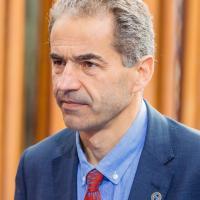

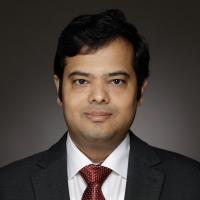







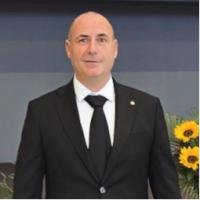
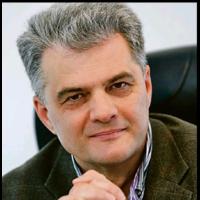




DAY 1 - THURSDAY, 26 MARCH
12:00-13:00 Registration & Welcome lunch
13:00-13:20 Welcome addresses
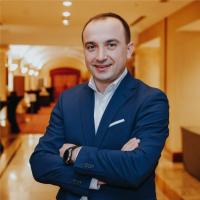
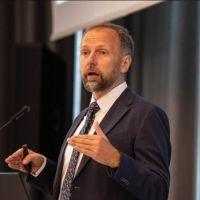
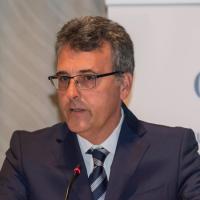
- Jurica Pavičić, Vice-Rector, International and Inter-Institutional Cooperation, University of Zagreb
- Edit Herczog, Chair, Science|Business Widening Initiative
- Luciano Saso, UNICA Secretary General
13:20-13:50 Keynote
- Manuel Heitor, Full Professor, Instituto Superior Técnico, University of Lisbon, former Secretary of State for Science, Technology and Higher Education in the Government of Portugal
13:50-14:00 Break
14:00-16:00 Session 1 | Research careers in Academia
- Archie Clements, Pro-Vice Chancellor, Research and Enterprise, Queen's University Belfast
- Marcela Linková, Head, Centre for Gender and Science, Institute of Sociology, Czech Academy of Sciences
- Simon Marti, Head, Council for Doctoral Education, European University Association
- Miroslav Rajter, Associate Professor, Faculty of Law, University of Zagreb
- Vladislav Slavov, Head, International Programs and Exchange Sector, Technical University of Sofia
- Mostafa Moonir Shawrav, Executive Director, Marie Curie Alumni Association
16:00-16:30 Coffee break
16:30-17:30 Session 2 | Careers in the public sector: From local to European
- Olga Borissova, Senior Advisor, European Union Agency for the Cooperation of Energy Regulators
- Goranka Lalić Novak, Full Professor, Faculty of Law, University of Zagreb
- Gabrijela Radić, Managing Director, Split Office, RISE Research and Innovation Services
17:30 Close of proceedings
19:30 Networking dinner
DAY 2 - FRIDAY, 27 MARCH
08:30-09:00 Welcome coffee
9:00-10:30 Session 3 | Job creation
- Nina Begičević Ređep, Professor, Faculty of Organization and Informatics, University of Zagreb
- Miro Hegedić, EIT Community Officer, EIT Community Hub Croatia; Partner, Smion
- Gabriela Kostovska Bogoeska, Director, Foundation for Management and Industrial Research
10:30-11:00 Coffee break
11:00-12:30 Session 4 | How to win the future?
- Eszter Salamon, Chief Executive Officer, Parents International
- Gojko Bežovan, Professor, Faculty of Law, University of Zagreb
- Dipti Pandya, Chair, European Association for Research Managers and Administrators (EARMA); Director of Research, University College Dublin; Co-Chair, International Network of Research Management Societies (INORMS)
12:30-12:45 Concluding remarks & closing
12:45-13:45 Networking lunch
University of Zagreb, Rectorate, Hall A1 (ground floor)
Radoslava Cimermana 88, Zagreb
For more information, please contact Denitsa Nikolova at [email protected]
Partners

 Receive the Funding Newswire [full access requires a subscription] each Tuesday, our Policy Bulletin each Thursday, and the fortnightly R&D Express, tracking reforms and investments in central and eastern Europe.
 A unique international forum for public research organisations and companies to connect their external engagement with strategic interests around their R&D system.