A Science|Business Integrators public conference, hosted by MEP Borys Budka (15:00-17:00 CEST)
Since the start of the EU’s current institutional cycle, ‘competitiveness’ has become an omnipresent feature of political debate and policy initiatives – not least in relation to Europe’s positioning and relative strengths vis-à-vis the US and China. Regardless of geopolitical contexts and comparisons, however, one of the EU’s fundamental challenges is to develop a higher rate of productivity in its economy that, over time, increases its overall size as well as income and welfare. Unless it can find an effective formula for doing so within its borders, little will change in the wider global picture.
For all of the pan-European rhetoric around competitiveness, the reality is that a great deal of political attention and expectations gravitate to member-states with higher levels of GDP and how their economic agendas will deliver against the Union’s strategic goals. With a few exceptions, Widening countries are generally considered as an afterthought in such debates – in no small part due to entrenched views that their economies are ‘laggards’ compared to their peers within the Union. Yet Widening economies are an integral and vital part of Europe’s single market – and as former Italian PM Enrico Letta has stressed repeatedly, the EU’s competitiveness agenda has little chance of success unless all member-states embrace the core reforms that underpin his ‘One Market’ approach, remove fragmentation and barriers between them, and begin to think in terms of “a rising tide that floats all boats”, not just their national vessel.
Against this backdrop, on June 2 the Science|Business Network and Widening Group will partner with MEP Borys Budka to convene a set of high-level debates on how to rebalance Europe’s competitiveness strategy and mindset towards a model that fully integrates the capabilities of its newer member-states.
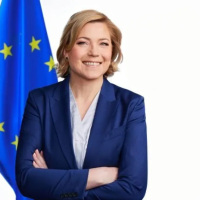

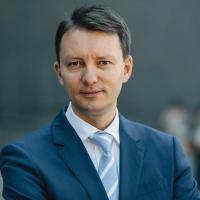

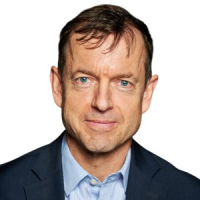
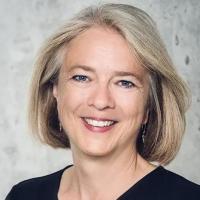
PRELIMINARY AGENDA
15:00 Welcome and introductory remarks
- Borys Budka, Member, European Parliament
- Maryline Fiaschi, Chief Executive Officer, Science|Business
15:05 PANEL SESSION I - Rebalancing for competitiveness and innovation: Can the next EU budget and regulatory frameworks deliver?
Ahead of formal negotiations between the EU institutions regarding the next multi-annual financial framework (MFF), a host of strategic questions remain open regarding the structure and governance of the tools that the Commission has proposed to achieve Europe’s strategic objectives beyond 2027, including the European Competitiveness Fund, the successor to Horizon Europe (FP10), and the future iteration of Cohesion Funds.
In one regard, the MFF proposals reflect the urgency felt within the Union to increase competitiveness, sovereignty and security, not least due to current budgetary pressures and geopolitical headwinds. In another, they underline the imperative to find ways to reduce the huge cost of current dependencies – with hundreds of billions of euros spent each year beyond EU borders to obtain the energy and digital resources needed to power its economy. Against this backdrop, this session will build on the European Parliament’s initial positions around the MFF to explore the critical factors that can unlock innovation for competitiveness – from budget and governance to regulatory harmonisation, single market reform and sectoral legislation.
Featured speakers:
- Borys Budka, Member, European Parliament
- Marzena Czarnecka, Professor, University of Economics in Katowice & Former Minister of Industry, Government of Poland
- Siegfried Mureşan, Member, European Parliament
Moderated by Florin Zubaşcu, Executive Editor, Science|Business
15:55 From Widening to Integration
Official launch of the new Science|Business Integrators initiative, presented by:
- Edit Herczog, Steering Group Chair & Senior Advisor, Science|Business
- Waldemar Dubianowski, Director, Brussels Office, NCBR
16:00 PANEL SESSION II - The Letta matrix: A new framework for Europe to tackle its productivity challenge?
Future economic growth will depend on productivity growth in the age of scarce resources, which will also require Europe to make full use of its internal market – covering both all current member states and also its near neighborhood. More and more, productivity in the 21st century is based on the fast deployment of new technologies and sustained investment into intangible assets, not least knowledge, skills and training.
In the past couple of decades, many Widening countries have established themselves as leaders in various digital industry domains – from AI and quantum to cybersecurity and fintech – and generate start-ups at a notably higher rate (per capita) than in western Europe. To harness the potential of these clusters of excellence and advanced technologies, strategic investments will also be needed to build the digital infrastructure that connects the region’s frontier organisations to the rest of the European economy.
While many EU leaders appear to understand the necessity of these courses of action, a common approach and collective sharing of the costs (financial and governance) remain elusive. In this extended final session, discussions will draw on Enrico Letta’s ‘One Market’ matrix for single market reform to assess the way forward.
Featured speakers:
- Lise Fuhr, Chief Executive Officer, GÉANT
- Daniel Gros, Director, Institute for European Policymaking, Bocconi University
- Kinga Stanislawska, Founder, Experior VC and European Women in VC
Moderated by Thomas Brent, Contributing Editor, Science|Business
16:45 Closing remarks & transition
17:00 Networking reception
Featuring a short keynote speech from:
- Henna Virkkunen, Executive Vice-President for Technological Sovereignty, Security and Democracy, European Commission
18:00 Closing of the conference
For more information please contact [email protected]
Partners


 Receive the Funding Newswire [full access requires a subscription] each Tuesday, our Policy Bulletin each Thursday, and the fortnightly R&D Express, tracking reforms and investments in central and eastern Europe.
 A unique international forum for public research organisations and companies to connect their external engagement with strategic interests around their R&D system.