European scientists are harnessing the human microbiome to fight diseases more effectively
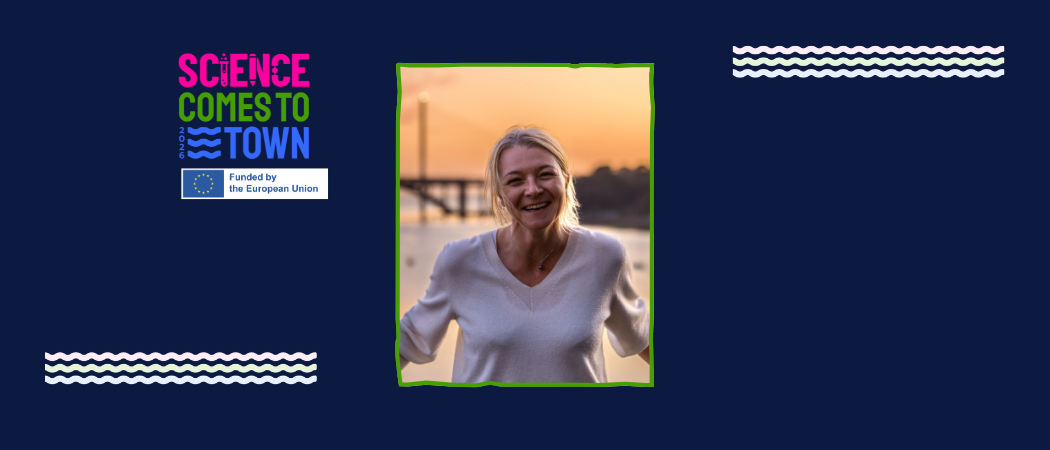
Geneviève Héry-Arnaud, Head, Infectious Agents Department, Brest University Hospital and Professor, Université de Bretagne Occidentale
Europe has the potential to be a leader in using human bacteria to develop pioneering medical treatments for immune disorders, recurring infections and other health problems, according to a leading French researcher.
Geneviève Héry-Arnaud, head of the Infectious Agents Department at Brest University Hospital and professor of bacteriology at the Université de Bretagne Occidentale (University of Western Brittany), says European researchers are at the forefront of analysing how microorganisms can be used to tackle chronic health problems and defend against infection. At the same time, Europe is playing a key role in developing standards for using bacteria in advanced medical therapies.
A high profile scientist in her native France and an ambassador for the EU’s Science Comes to Town (SCTT) project, Héry-Arnaud’s research focuses on the pulmonary microbiome, which she explains is "an underexplored, yet critically important ecosystem given the substantial global burden of respiratory diseases." Brest University's Infectious Agents Department collaborates with the French National Institute for Health and Medical Research (Inserm) and other institutions to explore the microbiome's enormous potential in medicine.
“Everybody has something to do with the microbiome," Héry-Arnaud’s says, referring to how microorganisms interact with their human hosts to support overall health. "It is quite a trendy topic right now because a lot of people are really interested in the link between the microbes that are natural to the human body and are very helpful for overall health."
Microbiome-based medicinal products (MMPs) are among the promising developments in the specialisation. MMPs use beneficial microorganisms to restore or modulate the body's natural microbial balance and can be especially effective in preventing infections, Héry-Arnaud says. She participated in recent discussions in Brussels on creating a regulatory framework for MMPs, notably through engagement with the Pharmabiotic Research Institute (PRI), a key stakeholder in this area. The current lack of guidelines for assessing MMPs outside clinical settings results in uncertainty, inconsistencies and potential delays in product development, according to the European Medicines Agency (EMA).
Building public awareness and confidence in research
Funded by the European Commission, the Science Comes to Town (SCTT) initiative connects Brest and two other coastal cities — Kiel in Germany and Split in Croatia — and aims to strengthen ties between communities, universities and research institutions to promote awareness of science and cooperation across Europe.
Public engagement plays a central role in Héry-Arnaud’s research on the microbiome and allows her to share her interest in the human body's bacteria — both the helpful and harmful varieties. The author of a popular book, Ces microbes qui nous veulent du bien: une bactériologue explore notre univers microbien (The Microbes That Do us Good: A Bacteriologist Explores our Microbial World), she regularly appears in French news media and is active in efforts to popularise scientific and medical research.
"I've always been fascinated by infectious diseases and microbes," Héry-Arnaud says, noting that sharing her passion with the public helps demystify science and encourage curiosity. Brest, along with SCTT partners Kiel and Split, is well-positioned to engage with the public due to its strong community ties. “Being next to the sea, I also think we are more opened-minded, and being smaller cities, it is easier to reach the citizens of all ages," she adds. "My own university is very dynamic at doing this.”
Additionally, Héry-Arnaud points to the potential for SCTT to ignite students' interest in science careers to address the shortages of skilled and professional workers in many European countries. When she introduces young minds to the microbial world, "it's something very special — I love those moments. You can see all the potential of these future scientists.”
As well as engaging with their communities, scientists must be transparent and acknowledge professional uncertainty if they want to build trust, Héry-Arnaud believes. "Our first responsibility as scientists is to say when we don't know," she says. "It's difficult to say that, but the public must have confidence in researchers and in medicine." Héry-Arnaud also stresses the importance of explaining evidence-based results and the rigorous processes behind clinical trials, to help the public understand how a scientific consensus is formed.
Europe’s pioneering approach to understanding the microbiome
Héry-Arnaud credits EU research funding and cooperation for supporting promising microbiological advances in patient care and treatment. "We are lucky in Europe to have a lot in common in terms of research culture, history and the love of science and there are many initiatives focusing on the microbiome,” she says. "Europe is one of the leaders, along with the US, in understanding the complexity of the microbiome and how we can address this complexity."
In addition to its pioneering work on the microbiome, Europe is well-placed to boost global collaboration on disease prevention and treatment. Héry-Arnaud views European leadership as crucial at a time when international health institutions are struggling with aid cuts and the US decision to withdraw from the World Health Organization. "We have a strong research ecosystem and a lot of experience working with other countries," she says, concluding: "We are well organised and have the scale to support international action and cooperation."
Science|Business, which connects policymakers, academics and industry through its news reporting, analysis and events, is an SCTT partner.

 Receive the Funding Newswire [full access requires a subscription] each Tuesday, our Policy Bulletin each Thursday, and the fortnightly R&D Express, tracking reforms and investments in central and eastern Europe.
 A unique international forum for public research organisations and companies to connect their external engagement with strategic interests around their R&D system.