Brussels promised simplification, but lump-sum grants shift the burden—from accountants to coordinators. Without digital tools, the risk hasn’t vanished. It’s metastasised.

The European Commission wants to simplify research funding. That’s the promise behind Horizon Europe’s shift to lump-sum grants: instead of reimbursing actual costs, the EU pays for completed work packages. The 2026–27 work programme marks a turning point—half of its budget is following this model, aimed at reducing red tape and opening access to smaller players.
But this “simplification revolution” may come with unintended consequences. While some paperwork disappears, the operational pressure intensifies. Project teams now face a different challenge: planning with greater precision, delivering with proof, and reporting with confidence. Without a strong digital backbone, simplification may feel more theoretical than real.
Beneath the buzz: simplification with conditions
EU research commissioner Ekaterina Zaharieva calls the model “simpler and more accessible” to newcomers. Indeed, a 2024 Commission evaluation estimates administrative cost reductions of 14%–30%, and over €60 million saved across early lump-sum projects. The goal is noble: reward delivery, not documentation. But as the European Court of Auditors noted, “intention to simplify the EU’s financial management should not come at the expense of accountability, effectiveness, efficiency, and economy.”
This is where reality bites. In practice, lump-sum grants don’t erase complexity—they reschedule it. Applicants must now prepare detailed WP-level budgets, justify distribution across partners, and ensure the consortium can hit milestones without internal confusion. “Lump sums prolong the application phase significantly,” says Dorte Dalsgaard, a veteran project manager quoted in Science|Business. He’s not alone: many coordinators now pre-select “safe” partners and build conservative proposals—undermining the experimental, risk-taking nature that EU research once encouraged.
Legal ambiguity and shadow compliance
The Commission says lump sums eliminate the need to report actual costs. But institutions remain wary. Some still demand timesheets, internal cost records, and parallel admin trails. Why? “There are legal uncertainties regarding lump sums,” explains Kamila Kozirog of the European University Association. “Some are quite hesitant to stop using time sheets.”
In short, many beneficiaries don’t trust the simplification to protect them in audits. And they may be right. The Commission foresees ex-post technical reviews up to five years after payment, requiring documentation that proves completion of work packages. In a model where performance replaces cost as the audit focus, weak evidence management becomes the new liability.
The digital fix: compliance by design
One reality is becoming clear: lump sums don’t remove complexity—they shift it. And without the right digital infrastructure, project coordinators are left exposed.
A new wave of tools is emerging—not to replace EU systems, but to support internal execution. These platforms vary in scope but all aim to help teams track contributions, validate delivery, and maintain documentation aligned with the Grant Agreement. Some beneficiaries report cutting administrative overhead by 30–40% simply by moving away from fragmented spreadsheets and scattered records.
One example is Kronis.app, originally designed to support compliance under actual-cost rules. The tool automates time tracking, workload mapping, and internal validations. With lump sums gaining ground, Kronis and similar platforms are evolving—adding features to help consortia coordinate work-package validation, monitor progress in real time, and align deliverables with funding conditions.
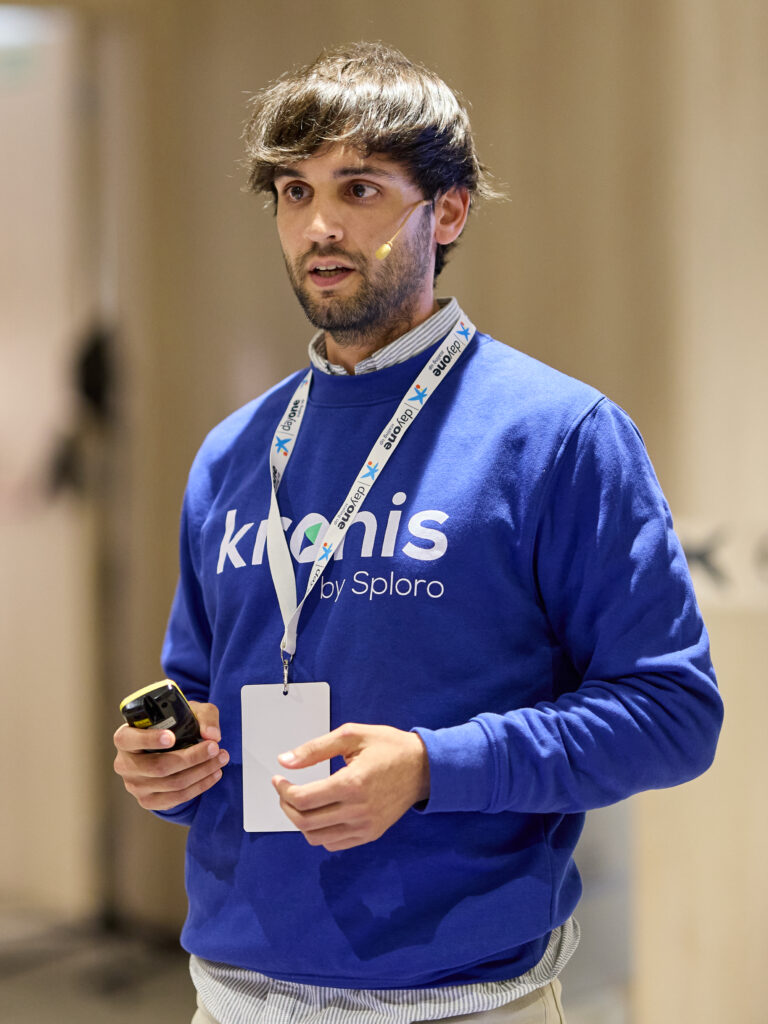
Photo Credits: J.P. Urdíroz D
“We created Kronis because too many teams were struggling to operationalise EU rules,” says cofounder of Sploro and Kronis, Alberto Sierra, whose company develops digital tools to help teams manage EU-funded projects. “Now, as lump sums change the game, we’re focused on helping them prove work done—not just costs incurred.”
Still, digital tooling is only part of the equation. Some institutions are rethinking internal governance: introducing shared dashboards, early-stage progress checks, or automated workflows that reflect the binary “complete or not” logic of lump-sum reporting. Others are investing in training and partner onboarding to reduce errors at the interface between planning and delivery.
Across the board, what matters is not the brand, but the discipline. Lump sums reward delivery, not process. And delivery requires infrastructure.
Digital first, or digital last?
There’s an irony at the heart of Horizon Europe’s new model: the more the Commission simplifies, the more complex project execution becomes for under-equipped teams. Lump sums demand accuracy without micromanagement, autonomy without ambiguity, and traceability without red tape. That’s only possible with disciplined, digital-first workflows.
And yet, many consortia still rely on emails, Excel files and best guesses. In a lump-sum environment, that’s reckless. Because the game has changed: if a deliverable is late or unverified, funding can be withheld. It’s no longer about justifying coffee receipts. It’s about proving progress—with the right data, at the right time.
Brussels may be pushing a narrative of flexibility and accessibility. But without digital project infrastructure, Horizon Europe’s simplification risks becoming performative. A genuine transformation requires pairing lump sums with digital tools—turning policy intent into operational capability.
The takeaway? If you’re entering lump-sum calls in 2026–27, don’t just prepare your budget. Prepare your systems. Pilot tools like Kronis early. Because in this new funding landscape, failing to digitalise isn’t just inefficient—it’s dangerous.



 Receive the Funding Newswire [full access requires a subscription] each Tuesday, our Policy Bulletin each Thursday, and the fortnightly R&D Express, tracking reforms and investments in central and eastern Europe.
 A unique international forum for public research organisations and companies to connect their external engagement with strategic interests around their R&D system.